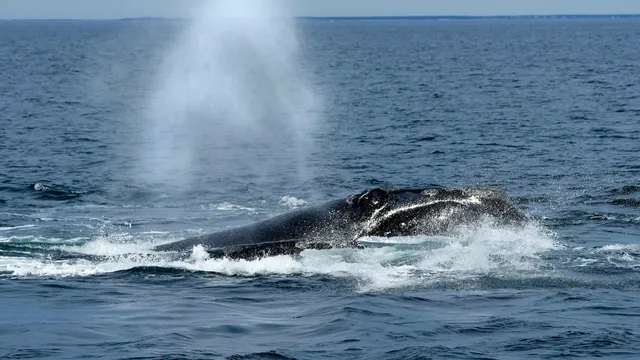
In Newfoundland, Canada, a rare sighting of a North Atlantic right whale occurred earlier this month when Kristinn Skulason spotted one from his office window in Bay de Verde. This sighting is significant as there are only about 380 North Atlantic right whales remaining globally, making it an unusual event for the area. The whale, named Goldfish, was last seen in the Gulf of St. Lawrence in 2023, and its presence near the shore was noted as a potential search for food. The Department of Fisheries and Oceans (DFO) was informed of the sighting, and while no fisheries closure was enacted, a notice of vigilance was issued to monitor the situation. The DFO encourages the public to report any sightings of right whales, noting the importance of tracking their behavior and health.
Meanwhile, in the United States, new protections for these endangered whales are facing significant delays. A plan supported by the fishing and lobster industries has emerged, which could postpone new regulations for nearly a decade. Environmentalists express concern that this delay could lead to further decline in the right whale population, which has already seen a 25% decrease from 2010 to 2020. The federal government has paused any new regulations until 2028, with a proposal to extend this moratorium to 2035. This situation has sparked a debate between conservationists and the fishing industry, with the latter arguing that existing measures are sufficient.
The current conservation framework remains in place, but environmental groups warn that without additional protections, the right whale population may continue to suffer from entanglements in fishing gear and collisions with boats. The population has shown slight recovery in recent years, but it remains significantly below the numbers seen in 2010. The ongoing discussions in Congress reflect the tension between economic interests and the urgent need for wildlife conservation.
As the situation develops, the fate of the North Atlantic right whale hangs in the balance, with advocates calling for immediate action to prevent further losses. The recent sighting in Newfoundland serves as a reminder of the species' precarious existence and the importance of protecting their habitat and food sources.