US military strikes Iran to protect shipping routes in the Strait of Hormuz
military conflicts
impactful
controversial

US military strikes Iran to protect shipping routes in the Strait of Hormuz

70
(Update: )
geopolitical region encompassing Egypt and most of Western Asia, including Iran
  • The US military conducted airstrikes on around 90 Iranian targets to protect commercial shipping in the Strait of Hormuz.
  • Iran retaliated by attacking US military bases in Kuwait and Bahrain, threatening further responses.
  • The situation has raised concerns about escalating conflict in the Middle East and its impact on global markets.
Share opinion
7

Story

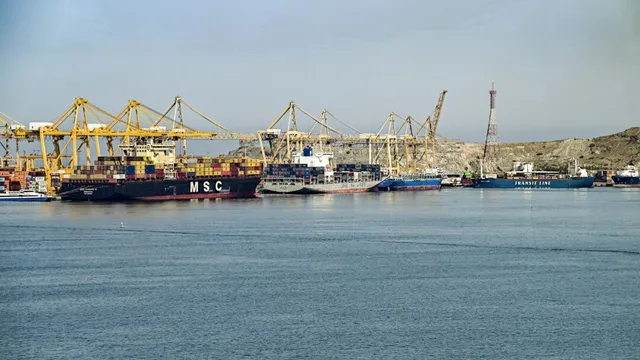
On July 8, 2026, the United States military conducted airstrikes on approximately 90 Iranian targets in response to escalating tensions in the Middle East, particularly concerning threats to commercial shipping in the Strait of Hormuz. This military action followed a series of provocations, including attacks on ships transiting the Strait by Iranian forces. The strikes aimed to diminish Iran's capacity to launch further assaults on maritime traffic, which is vital for global oil supply and trade. The US President Donald Trump indicated that these actions were a direct response to Iran's aggressive behavior, emphasizing the need to maintain open shipping lanes. In the aftermath of the US strikes, Iran's Islamic Revolutionary Guard Corps (IRGC) retaliated by attacking two US military bases located in Kuwait and Bahrain. The IRGC warned that if the US continued its military actions, they would extend their response to other US bases in the region. This tit-for-tat escalation has raised concerns about a broader conflict in the Middle East, as both nations appear to be on a collision course. The situation remains volatile, with the potential for further military engagements. Financial markets reacted to these developments with mixed signals. As of the morning of July 9, 2026, S&P 500 futures rose by 0.2%, and Nasdaq 100 contracts gained 0.6%, driven by advances in semiconductor stocks. However, the FTSE 100 index fell by 0.8% due to a slump in AstraZeneca shares following the failure of its Wainua drug to prevent heart problems. In commodities, brent crude futures remained relatively stable near $78 a barrel, despite earlier gains being erased after the US military's actions against Iran. The geopolitical landscape is further complicated by the Federal Reserve's recent meeting minutes, which indicated that some committee members are considering a rate increase. Traders are now awaiting upcoming inflation data and testimony from Federal Reserve Chair Kevin Warsh to gauge the future direction of interest rates. The interplay between military actions and economic indicators highlights the interconnectedness of global events, where geopolitical tensions can significantly impact financial markets and economic policies.

Context

The Strait of Hormuz is a strategically vital waterway that connects the Persian Gulf to the Gulf of Oman, serving as a critical passage for a significant portion of the world's oil supply. Approximately 20% of the global oil trade transits through this narrow strait, making it a focal point of geopolitical tensions, particularly between Iran and the United States. The region has witnessed a series of military confrontations and diplomatic standoffs, primarily driven by Iran's assertive posture in the Gulf and the U.S. commitment to ensuring the free flow of maritime trade. The potential for conflict in this area poses significant risks not only to regional stability but also to the global economy, given the reliance on oil exports from the Gulf states. In recent years, the U.S. has increased its military presence in the region as a deterrent against Iranian aggression, which has included threats to close the Strait of Hormuz in response to sanctions and military actions. Iran's naval capabilities, including fast attack boats and missile systems, have raised concerns about its ability to disrupt shipping lanes. The U.S. has conducted freedom of navigation operations to assert its rights in international waters and to reassure allies in the region. These operations often lead to heightened tensions, with both nations engaging in provocative maneuvers that could escalate into open conflict. The Iranian government has utilized asymmetric warfare tactics, including the use of proxy forces and cyber operations, to project power and influence in the region. This strategy complicates the U.S. military response, as it must consider the broader implications of any direct confrontation with Iran. Diplomatic efforts have been made to de-escalate tensions, but these have often been undermined by mutual distrust and conflicting interests. The U.S. withdrawal from the Joint Comprehensive Plan of Action (JCPOA) in 2018 further strained relations, leading to increased Iranian provocations and a more aggressive U.S. military posture. The potential for a military conflict in the Strait of Hormuz remains a pressing concern for policymakers. A conflict could have catastrophic consequences, not only for the countries directly involved but also for global energy markets and international security. The international community continues to monitor the situation closely, advocating for diplomatic solutions to prevent escalation. As tensions persist, the need for a comprehensive strategy that balances military readiness with diplomatic engagement is crucial to ensuring stability in this vital region.