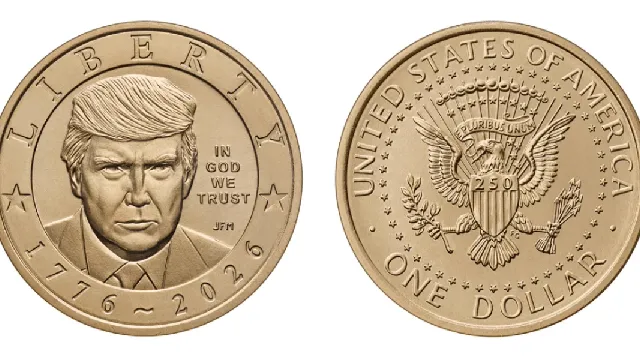
In the United States, the U.S. Mint has initiated the production of a new $1 coin that features the likeness of President Donald Trump. This coin is part of the celebrations for America's 250th birthday, with its final design approved earlier this year by the U.S. Commission of Fine Arts, a body whose members were appointed by Trump himself. The coin is set to be released in the fall and is intended to symbolize patriotism and the enduring legacy of liberty. Treasury Secretary Scott Bessent announced the coin's production, emphasizing its role in celebrating American values and freedom.
The design of the coin has sparked controversy, particularly because federal law prohibits the depiction of a living president on U.S. currency. Despite this, the Treasury Secretary has the authority to authorize the minting of coins under certain circumstances. The front of the coin features Trump in a suit and tie, with the words 'LIBERTY' and 'IN GOD WE TRUST' prominently displayed. The reverse side depicts the traditional bald eagle, a symbol of the United States.
In addition to the coin, the Treasury Department has also announced that all new U.S. paper currency will bear Trump's signature, replacing the traditional treasurer's signature that has been in place for over 165 years. This change has faced public skepticism, with a significant portion of the population disapproving of the decision to replace the treasurer's signature with that of a sitting president. A poll conducted in April indicated that 59% of adults disapproved of this change.
Legal challenges have emerged in response to the coin's production and the signature change. An Oregon resident filed a lawsuit seeking to block the issuance of currency featuring a sitting president's image, citing Title 31 of the U.S. Code, which outlines the Treasury Secretary's authority over coin design. The outcome of this legal battle could have implications for the future of U.S. currency and the portrayal of living presidents on it.