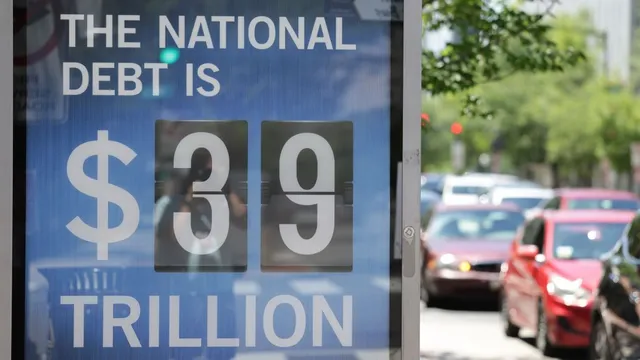
In the United States, the national debt has surpassed 100% of the country's GDP, prompting concerns from various economic experts and organizations. The Peterson Foundation, a think tank focused on fiscal sustainability, has highlighted the potential negative impacts of this rising debt on the labor market and wages, particularly for younger generations such as Gen Z and Gen Alpha. According to an analysis by EY's Quantitative Economics and Statistics, the increasing debt could lead to a loss of 1.2 million jobs by 2035, escalating to 3.6 million jobs by 2075 if no action is taken to stabilize the debt.
The analysis also indicates that wages will decline over time if policymakers do not address the debt issue. By 2035, take-home pay could decrease by 0.6%, with projections showing a drop of 5.3% by 2075. The Congressional Budget Office has reported that net interest on public debt has reached $857 billion for the fiscal year, which is significantly higher than the combined outlays for several government departments. This situation raises alarms about the sustainability of current fiscal policies and the burden placed on future taxpayers.
The Peterson Foundation has urged younger Americans to advocate for fiscal responsibility, emphasizing that the decisions made by current leaders will have lasting consequences on their economic future. The report suggests that a constitutional amendment may be necessary to enforce fiscal discipline, as previous attempts at statutory restraints have failed. In 1979, 39 states sought a constitutional convention to propose a fiscal responsibility amendment, highlighting the urgency of the situation.
As the national debt continues to grow, the implications for the economy and job market become increasingly dire. Experts like JPMorgan Chase CEO Jamie Dimon have expressed concerns about a potential bond market crisis, suggesting that while the economy may adapt, it is not a sustainable approach to managing debt. The need for a proactive solution is critical to ensure a prosperous economic future for younger generations.