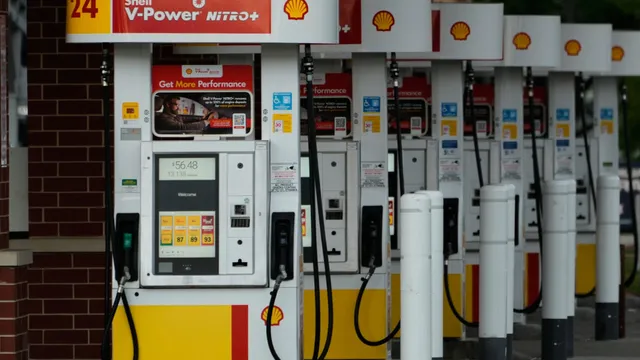
In the United States, gas prices have surged to over $4 per gallon, reflecting the impact of renewed conflict in the Middle East. This increase comes after a period of inflation that has already strained household budgets. The American Automobile Association reported that just a week prior, the price was $3.87, and a month ago, it was $3.14. The rise in prices is attributed to the geopolitical tensions surrounding Iran, which borders the Strait of Hormuz, a crucial route for oil exports. As ships become hesitant to navigate this area, supply is disrupted while demand remains steady, leading to higher prices.
The price of Brent Crude oil was reported at $88 per barrel, slightly down from a recent high of $91. Market analysts are not optimistic about a quick resolution, with crude oil futures projected to rise by approximately 1.5% over the next three months, surpassing $80 a barrel. Predictions indicate that prices may not return to the $70 range until December 2027, indicating a prolonged period of high energy costs for consumers.
The escalation of conflict in the Middle East has created a precarious balance of risks for the economy. Goldman Sachs' chief U.S. economist, Jan Hatzius, outlined two potential scenarios: a rapid recovery in oil flows could lead to a sharp decrease in prices if tensions ease, while further attacks on oil infrastructure could push prices back above $100 per barrel. This uncertainty complicates the inflation outlook, particularly as gas and fuel prices are key components of inflation metrics.
As inflationary pressures continue, the Federal Reserve may need to adjust its strategies to manage economic conditions. Hatzius suggests that the Fed's Chairman, Kevin Warsh, will have to provide more detailed explanations of the committee's economic outlook to maintain control over the narrative and prevent financial conditions from deteriorating further. The current situation underscores the interconnectedness of global events and their direct impact on domestic economic conditions, particularly for American consumers already facing financial strain.