New study reveals RNA can form complex structures previously unseen
science
ground breaking breakthrough
informative

New study reveals RNA can form complex structures previously unseen

10
(Update: )
nonprofit organization in Bethesda, United States
  • New research shows that RNA can adopt large and complex structures, challenging previous assumptions.
  • The study suggests that RNA molecules could link together through specific folding sequences.
  • These findings raise questions about the role of RNA in the origins of life and its potential to form complex configurations.
Share opinion
1

Story

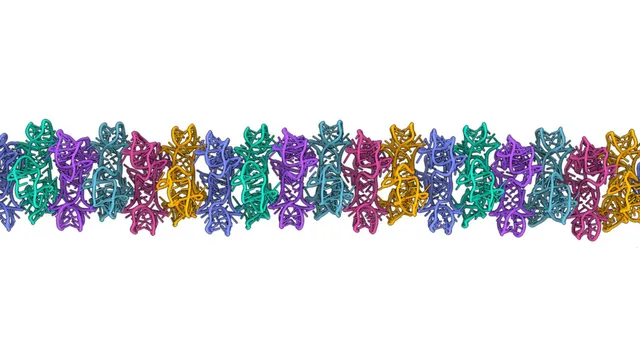
In a groundbreaking study, researchers from Sun Yat-Sen University in China have challenged long-held beliefs about the capabilities of RNA, suggesting that it could have played a more complex role in the origins of life on Earth. Traditionally, scientists believed that RNA, which is a molecular cousin of DNA, could only form small and simple structures. However, this new research indicates that RNA molecules can adopt large and sophisticated geometries, such as filaments and cages, which raises intriguing questions about the nature of early life forms. The study aligns with the RNA world hypothesis, which posits that RNA-based life forms preceded modern organisms that utilize DNA and proteins. This hypothesis suggests that primordial species relied on RNA for both genetic information storage and catalyzing reactions, similar to the role proteins play in contemporary cells. The researchers, led by Lin Huang, hypothesized that RNA molecules could link together through specific sequences that fold into structures known as 'kissing stem loops.' When these loops from different RNA strands bond, they can form larger complexes. The study revealed that some RNA molecules could assemble into cages resembling the structures of common viruses, including icosahedra, which are three-dimensional shapes made up of 20 equilateral triangles. This finding raises the possibility that RNA-based capsids could have packaged genomes in the RNA world, although the researchers emphasize that this does not prove it actually occurred. To further validate their findings, the team suggests that recreating the environmental conditions present at the dawn of life, such as high temperatures and low pH, could strengthen the theory that these structures were indeed present. The researchers generated these large RNA structures using short RNA strands, each no longer than 200 subunits, which is significant because longer RNA strands are more prone to breaking. This discovery provides hope that these complex RNA molecules could have formed in the primordial RNA world. However, the researchers have only observed these structures forming in laboratory conditions, and further investigation is needed to determine if they can assemble inside bacteriophage-infected bacteria, where they were derived from.

Context

The RNA world hypothesis is a compelling scientific theory that proposes RNA, rather than DNA or proteins, was the first self-replicating molecule that led to the emergence of life on Earth. This hypothesis suggests that early life forms were based on RNA, which served both as a genetic material and as a catalyst for biochemical reactions. The idea is rooted in the observation that RNA possesses the unique ability to store genetic information like DNA while also having the capability to catalyze chemical reactions, similar to proteins. This dual functionality makes RNA a prime candidate for the precursor of life, as it could have facilitated the processes necessary for the evolution of more complex biological systems. The RNA world hypothesis provides a plausible explanation for the origin of life, suggesting that life could have arisen from simple organic molecules through a series of chemical reactions leading to the formation of RNA molecules that could replicate themselves. Research supporting the RNA world hypothesis has gained momentum through various experimental findings. For instance, scientists have successfully synthesized RNA molecules in laboratory settings that can catalyze their own replication, demonstrating the potential for RNA to function as both genetic material and a catalyst. Additionally, the discovery of ribozymes—RNA molecules with enzymatic activity—has further bolstered the hypothesis. These ribozymes can catalyze a variety of biochemical reactions, providing evidence that RNA could have played a central role in early metabolic processes. Furthermore, the presence of RNA-like molecules in modern organisms, such as ribosomal RNA, suggests that RNA may have been a fundamental component of the earliest life forms, supporting the idea that an RNA world could have existed before the evolution of DNA and proteins. Despite its strengths, the RNA world hypothesis is not without challenges. One of the primary criticisms is the difficulty in explaining how RNA molecules could have formed spontaneously under prebiotic conditions. While experiments have shown that RNA can be synthesized from simple organic compounds, the specific conditions and environments required for this synthesis remain a topic of ongoing research. Additionally, the stability and fidelity of RNA replication in early environments are still not fully understood, raising questions about how RNA could have maintained its integrity over time. These challenges highlight the need for further investigation into the prebiotic chemistry that could have led to the formation of RNA and the transition to more complex life forms. In conclusion, the RNA world hypothesis presents a fascinating framework for understanding the origins of life on Earth. By positing that RNA was the first self-replicating molecule, it offers insights into the biochemical processes that may have led to the emergence of life. While there are still significant questions to be addressed, ongoing research continues to explore the viability of this hypothesis, with the potential to uncover new information about the early stages of life and the evolution of biological systems. As scientists delve deeper into the origins of life, the RNA world hypothesis remains a pivotal concept that could reshape our understanding of how life began on our planet.