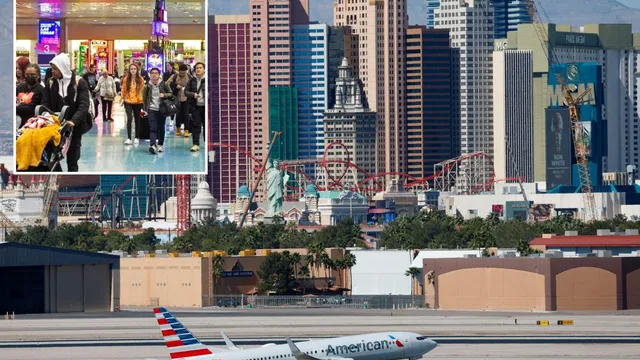
In the United States, extreme heat caused significant disruptions at Harry Reid International Airport in Las Vegas over the weekend. From Friday to Sunday, temperatures soared to 114, 113, and 112 degrees Fahrenheit, leading to a staggering 580 flight delays. The intense heat created unsafe conditions for fully loaded planes to take off, prompting airlines to request passengers to voluntarily give up their seats. On Friday alone, 284 delays affected about one-third of scheduled departures, with airlines offering travel vouchers up to $2,500 to incentivize passengers to deplane.
Travelers reported unusual scenes at the airport, with one passenger, Trish, stating that around half of the passengers on her United Airlines flight were asked to leave due to weight restrictions. She described the experience as unprecedented, having arrived at the airport at 1 p.m. on Friday and not reaching her destination until 8 a.m. the following day. Another viral video showed an American Airlines agent requesting 50 volunteers to give up their seats as temperatures reached 114 degrees.
The Federal Aviation Administration (FAA) explained that high temperatures reduce air density, which in turn decreases the lift generated by an aircraft's wings. This situation forces planes to require more runway length to take off safely. Airlines can mitigate this by removing cargo or passengers or by loading less fuel, which may necessitate additional fuel stops. If temperatures exceed the aircraft manufacturer's operating limits, the plane cannot take off at all.
Despite Harry Reid International Airport having one of the longest runways in the country at 14,835 feet, flight experts indicated that even this length may not suffice under extreme heat conditions. Reed Yadon, a flight expert, noted that the heat affects both lift and thrust, making it challenging for fully loaded jets to safely climb over surrounding terrain in the event of an engine failure. The unusual circumstances at the airport highlight the impact of extreme weather on air travel and the need for airlines to adapt to such conditions.