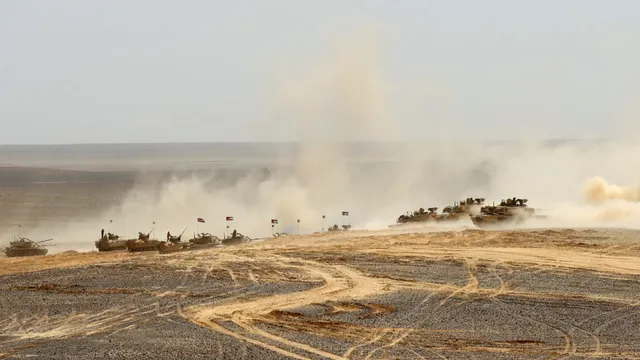
Since the onset of the conflict, the situation between the U.S. and Iran has deteriorated significantly, with both nations inching closer to all-out war. The latest incident occurred in Iraq, where a U.S. service member was killed during a controlled detonation of a downed Iranian drone. This tragic event marks the 17th U.S. military fatality since the war began, highlighting the escalating violence in the region. The U.S. military has responded by targeting Iranian military facilities, aiming to degrade Iran's capabilities in the Strait of Hormuz, a critical shipping route.
Iran has retaliated by launching attacks on U.S.-allied countries throughout the Middle East, with Jordan reporting missile interceptions. The conflict has also seen attacks on civilian infrastructure, including power and water facilities in Kuwait, raising concerns about the humanitarian impact of the ongoing hostilities. The U.S. has reimposed a naval blockade on Iranian ports to disrupt crude oil shipments, further intensifying tensions in the region.
As the fighting continues, the U.S. military's Central Command has stated that their operations are designed to swiftly punish the Islamic Revolutionary Guard Corps, which plays a significant role in Iran's military strategy. The Iranian government has reported significant casualties from U.S. strikes, with at least 50 people killed and over 500 wounded, indicating the severe impact of the conflict on both military and civilian populations.
The situation remains precarious, with both sides preparing for further combat. The Israeli military has expressed readiness to engage if necessary, while the maritime threat to commercial shipping in the region has been deemed severe. The ongoing violence and military actions have created a complex and dangerous environment, with the potential for further escalation if diplomatic solutions are not pursued.