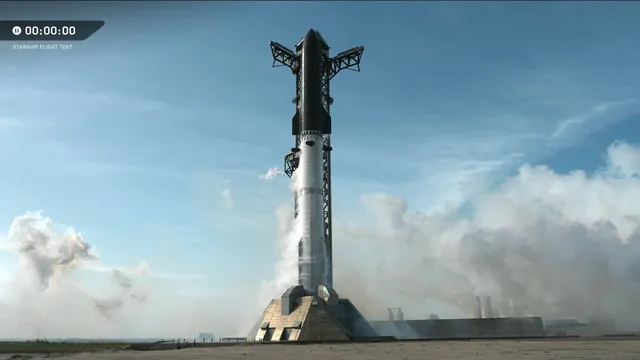
On July 16, 2026, SpaceX attempted to launch its thirteenth flight of the Starship megarocket, but the launch was aborted just before liftoff. The automated safety features activated at T-minus 0, halting the launch as the Super Heavy V3 booster began to ignite its engines. SpaceX spokesperson Dan Hewitt confirmed the hold during the company's livestream, stating that the engines were shut down right as they were starting to ignite. The company plans to analyze the situation and determine when the next launch attempt can be made, potentially as soon as the following Friday.
This flight was intended to follow a similar profile to the previous Flight 12, which aimed to send Starship into space but not into orbit. The Super Heavy V3 booster was supposed to return to Earth for a splashdown in the Gulf of Mexico after separating from Starship. However, during Flight 12, the booster failed to achieve a successful landing. The mission also involved deploying Starlink satellites, which would have transmitted images of Starship's heat shield back to mission control before reentering Earth's atmosphere.
The Starship used for this flight is a V3 model, featuring several design improvements over its predecessors. After deploying the Starlink satellites, the Starship was expected to reignite one of its six Raptor engines for a brief burn. The planned mission duration was about an hour, concluding with a splashdown in the Indian Ocean north of Australia. SpaceX aims to use Starship as its primary rocket, replacing the Falcon 9, and is working towards supporting NASA's Artemis program, which includes sending astronauts to the moon by 2028.
The success of the Starship program is crucial for SpaceX and NASA, as multiple successful launches are required for the Artemis IV mission, which aims to return humans to the lunar surface for the first time in over 50 years. The timeline for these missions is tight, with NASA's Artemis III mission targeted for launch before the end of the next year. The recent scrubbed launch highlights the challenges SpaceX faces in achieving its ambitious goals for space exploration and satellite deployment.