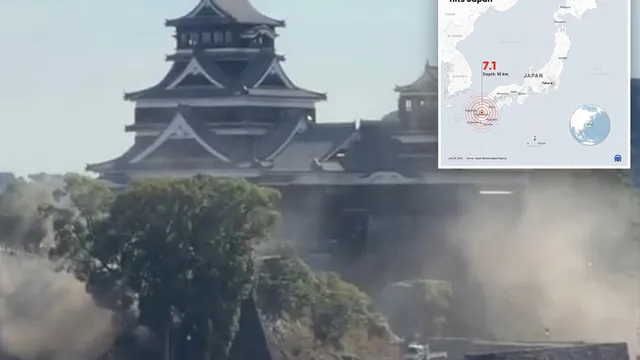
On July 27, 2026, a significant earthquake measuring 7.1 on the Richter scale struck Kumamoto, located on Japan's southern main island of Kyushu. The Japan Meteorological Agency issued a temporary tsunami advisory for the nearby Ariake and Yatsushiro Seas, affecting the western coasts of Kumamoto, Nagasaki, Fukuoka, and Saga prefectures. Although the advisory was lifted within two hours, the earthquake prompted immediate concerns for public safety and potential aftershocks. Reports indicated that the earthquake caused injuries, damage to infrastructure, and disruptions in local services, including power outages and fires.
In response to the earthquake, Prime Minister Sanae Takaichi urged residents to exercise caution, particularly those living near the coastline, where a tsunami of up to 3 feet was initially predicted. The government established a task force to gather information, assess damage, and prepare for possible rescue operations. Takaichi emphasized the importance of prioritizing the safety of citizens, advising those in affected areas to be careful with fire and broken glass due to the earthquake's aftermath. Local fire departments received numerous emergency calls as residents sought assistance.
Shinji Kiyomoto, an official from the Japan Meteorological Agency, noted that the earthquake was shallow and could trigger further seismic activity in the region. He warned residents to remain vigilant for the next two to three days, as the risk of aftershocks remained high. Fortunately, the Japan Fire and Disaster Management Agency reported no significant damage to major public facilities or infrastructure, although assessments were ongoing. Additionally, the Nuclear Regulation Authority confirmed that there were no abnormalities detected at three nearby nuclear power plants, alleviating concerns about nuclear safety in the wake of the earthquake.
Transportation services were also affected, with Shinkansen bullet trains and local trains in Kyushu being suspended for safety checks. Aso Kumamoto Airport closed its runway, stating there was no prospect of resuming operations shortly. The Japanese Defense Ministry dispatched aircraft to the area to evaluate the situation and assist in any necessary response efforts. This earthquake follows a history of seismic activity in the region, including a deadly quake in 2016 that resulted in significant casualties and damage, highlighting the ongoing risks faced by residents in this earthquake-prone area.