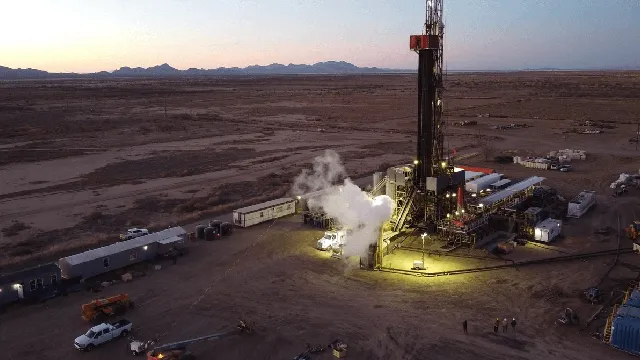
Zanskar revives failing geothermal well into a top producer
business
innovative
impactful

Zanskar revives failing geothermal well into a top producer

11
(Update: )
country primarily in North America
  • Zanskar acquired a struggling power plant in New Mexico in 2024.
  • After drilling a new well, the Lightning Dock site became one of the most productive geothermal wells in the US.
  • The success of this project indicates that old geothermal sites may still have untapped potential.
Share opinion
1

Story

In 2024, Zanskar, a geothermal company, acquired a power plant in New Mexico that was struggling to maintain productivity. The Lightning Dock site had been experiencing a significant decline in geothermal heat output, losing between five and ten times more heat annually than average wells. To address this issue, Zanskar drilled a new well and operated the power plant for a full year, resulting in a remarkable turnaround. The new well has become one of the most productive pumped geothermal wells in the United States, supplying sufficient heat to run the power plant without any issues. The success of the Lightning Dock site highlights the potential for revitalizing old geothermal well sites, which may still hold significant geothermal resources. However, the geothermal energy sector faces challenges, including geographic constraints, as power plants must be located on geothermal reserves predominantly found in the western United States. Additionally, the industry grapples with the fact that most geothermal wells experience a gradual decline in productivity over time. Zanskar's innovative approach involved utilizing artificial intelligence to identify hidden geothermal systems, which are sites with substantial geothermal potential that show little to no signs of viability on the surface. This technology played a crucial role in discovering new drilling locations, including the successful drilling at the Lightning Dock site. The company also employed advanced drill bit technology, refined from the oil and gas industry, allowing them to drill deeper and faster at competitive costs. The new well's productivity has been so impressive that it has occasionally supplied excess heat to the existing power plant, indicating the possibility of expanding operations to a larger facility. While other facilities in Nevada may have wells with higher flow rates, Zanskar's well at Lightning Dock is favored due to its higher temperatures, which contribute to long-term productivity. The geothermal industry is experiencing a surge in interest and investment, with companies like Fervo Energy gaining attention for their enhanced geothermal techniques, which open up new drilling opportunities in previously restricted areas.

Context

Geothermal energy presents a promising avenue for sustainable energy production in the United States, yet it faces several significant challenges that hinder its widespread adoption. One of the primary obstacles is the high initial capital investment required for geothermal power plants. The drilling of wells to access geothermal resources can be particularly expensive and risky, as the exact location and temperature of geothermal reservoirs are often uncertain. This financial barrier can deter investors and limit the development of new geothermal projects, especially in a competitive energy market where other renewable sources, such as solar and wind, may offer lower upfront costs and quicker returns on investment. Another challenge is the geographical limitation of geothermal resources. While the U.S. has substantial geothermal potential, particularly in the western states, the distribution of these resources is uneven. Areas with the highest geothermal activity, such as California and Nevada, are not always located near population centers where energy demand is highest. This necessitates the development of extensive transmission infrastructure to transport electricity from remote geothermal plants to urban areas, further increasing costs and complicating project feasibility. Additionally, the environmental impact of geothermal energy extraction, including land use and potential water resource depletion, raises concerns among local communities and regulatory bodies. Regulatory hurdles also pose a significant challenge to the growth of geothermal energy in the U.S. The permitting process for geothermal projects can be lengthy and complex, involving multiple federal, state, and local agencies. This bureaucratic red tape can delay project timelines and increase costs, making it difficult for developers to navigate the regulatory landscape. Furthermore, there is a need for clearer policies and incentives to promote geothermal energy development, as existing frameworks may not adequately support the unique characteristics of geothermal resources compared to other renewable energy sources. Finally, public awareness and acceptance of geothermal energy remain limited. Many consumers are unfamiliar with how geothermal energy works and its benefits compared to more traditional energy sources. Educational initiatives and outreach programs are essential to inform the public about the advantages of geothermal energy, such as its low emissions and reliability as a baseload power source. By addressing these challenges through targeted investments, regulatory reforms, and public engagement, the U.S. can unlock the full potential of geothermal energy and contribute to a more sustainable energy future.