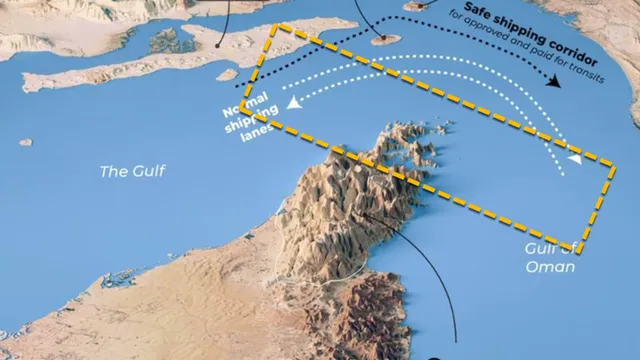
Iran asserts control over Strait of Hormuz amid US tensions
politics
controversial
impactful

Iran asserts control over Strait of Hormuz amid US tensions

82
(Update: )
Iranian conservative politician, professor, and former air force pilot
strait between the Gulf of Oman and the Persian Gulf
country primarily in North America
legislative body of government
  • Iran's Parliament Speaker Mohammad Bagher Ghalibaf emphasized Tehran's control over the Strait of Hormuz amid rising tensions with the U.S.
  • Ghalibaf warned that U.S. military actions would be met with retaliation, asserting that American threats would not dictate Iran's terms.
  • The ongoing conflict has significant implications for regional economies, particularly for Gulf-based firms reliant on the Strait for maritime access.
Share opinion
8

Story

In recent developments, Iran's Parliament Speaker Mohammad Bagher Ghalibaf reiterated Tehran's control over the Strait of Hormuz, emphasizing that it would only be opened under Iran's conditions. This statement came in the wake of escalating tensions between the U.S. and Iran, marked by missile strikes exchanged between the two nations. Ghalibaf warned that U.S. aggression would have consequences, asserting that the era of American 'bullying' is over. He highlighted that any military action from the U.S. would be met with retaliation, reinforcing Iran's stance on protecting its sovereignty and national interests. Additionally, Esmaeil Baghaei, the spokesperson for Iran's Foreign Ministry, criticized the U.S. for violating a Memorandum of Understanding (MoU) that was established to ensure mutual commitments. He pointed out that the MoU included provisions for Iran to determine the future administration of the Strait of Hormuz in consultation with Oman and other Gulf states. Baghaei's remarks underscored Iran's determination to safeguard its interests in the region, particularly in light of the ongoing conflict and the U.S.'s military actions. The situation has significant implications for regional economies, especially for Gulf-based firms that are heavily reliant on the Strait of Hormuz for maritime access. As these companies prepare to report their quarterly earnings, analysts anticipate mixed results due to the war's impact on inflation and interest rates. The financial health of banks and real estate sectors is particularly vulnerable, while telecom companies may fare better due to long-term contracts and stable demand. Overall, the ongoing tensions between the U.S. and Iran, coupled with the strategic importance of the Strait of Hormuz, continue to shape the geopolitical landscape of the Gulf region. The potential for further military escalation remains a concern, as both sides navigate a complex web of commitments and threats, with the future of maritime access hanging in the balance.

Context

The ongoing conflict in Iran has significant implications for the economies of the Gulf region, affecting various sectors including oil production, trade, and investment. The Gulf Cooperation Council (GCC) countries, which include Saudi Arabia, the United Arab Emirates, Qatar, Kuwait, Oman, and Bahrain, are particularly vulnerable to the repercussions of instability in Iran due to their geographical proximity and economic interdependence. The war has led to increased tensions and uncertainty in the region, prompting fluctuations in oil prices, which are a critical component of the Gulf economies. As oil prices rise due to fears of supply disruptions, Gulf nations may experience short-term revenue boosts; however, prolonged instability could deter foreign investment and disrupt trade routes, ultimately harming economic growth in the long run. Moreover, the conflict has prompted GCC countries to reassess their security and defense strategies, leading to increased military spending. This shift in focus can divert resources away from essential public services and infrastructure development, potentially stunting economic diversification efforts that many Gulf states have been pursuing. The need for enhanced security measures may also lead to a more militarized regional environment, which could further exacerbate tensions and deter tourism and foreign direct investment, both of which are vital for the economic sustainability of these nations. In addition to direct economic impacts, the war in Iran has broader implications for regional trade dynamics. The Gulf states have historically relied on trade routes that pass through the Strait of Hormuz, a critical chokepoint for global oil shipments. Any disruption in this area due to military conflict could lead to significant increases in shipping costs and delays, affecting not only Gulf economies but also global markets. The potential for increased shipping insurance costs and the need for alternative routes could further strain the economic relationships between Gulf states and their trading partners. Lastly, the humanitarian and social dimensions of the conflict cannot be overlooked. The influx of refugees and displaced persons from Iran and surrounding areas may place additional pressure on Gulf economies, particularly in terms of public services and housing. As these nations grapple with the economic fallout of the war, they must also address the social implications of increased migration and the need for integration of displaced populations. In conclusion, the impact of the Iran war on Gulf economies is multifaceted, encompassing immediate economic challenges, long-term strategic shifts, and social considerations that require careful management to ensure stability and growth in the region.