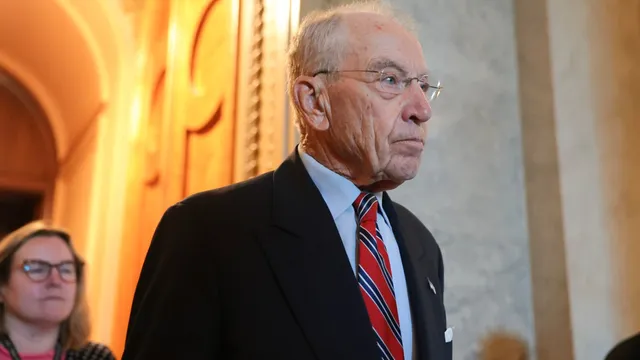
In a recent Senate floor speech, Senator Chuck Grassley, who serves as the Senate President Pro Tempore and is a member of the Finance Committee, highlighted the urgent issue surrounding the Social Security retirement trust fund. He stated that the fund is expected to be depleted by 2032, which raises significant concerns for millions of retirees who rely on these benefits. Once the fund is depleted, payroll tax revenue will only be able to cover approximately 78 percent of the scheduled benefits, leading to an automatic cut of about 22 percent for retirees. This situation poses a serious risk not only to retirees but also to the national economy as a whole.
Grassley emphasized that both Republicans and Democrats recognize the seriousness of the funding shortfall, despite their differing opinions on how to address it. Recent surveys indicate a growing anxiety among Americans regarding the future of Social Security. An AARP poll revealed that only 36 percent of Americans are confident in the program's future, while a Bipartisan Policy Center survey found that 74 percent worry Social Security could run out before they retire, and 80 percent are concerned about potential benefit cuts by Congress.
The senator pointed out that the longer Congress delays action, the more likely it is that any solution will rely heavily on debt financing to bridge the funding gap. This reliance on debt could have broader economic implications. Grassley noted that there are fewer workers paying payroll taxes for each beneficiary compared to previous decades, which exacerbates the funding issue. Experts have warned that as Congress waits, the burden of funding Social Security will fall on a smaller group of taxpayers.
To address the funding shortfall, various proposals have been suggested, including raising or eliminating the payroll tax cap, which is a popular idea among Democrats. This would require higher earners to contribute a larger share of their income to Social Security taxes. However, such proposals are often politically unpopular, as they necessitate individuals contributing more to fund current and future benefits. Experts believe that a comprehensive solution will likely involve a bipartisan approach that combines additional revenue with measured adjustments to benefits or eligibility criteria. Grassley concluded by stressing the need for an honest national discussion about Social Security to prevent the impending cuts.