Elena Kagan asserts Supreme Court independence from Trump
politics
controversial
left-biased

Elena Kagan asserts Supreme Court independence from Trump

31
(Update: )
US Supreme Court justice since 2010 (born 1960)
president of the United States from 2017 to 2021
  • Justice Elena Kagan spoke at a judicial conference in Bellevue, Washington, addressing the Supreme Court's role.
  • She highlighted key rulings where the court rejected President Trump's policies, emphasizing its independence.
  • Kagan concluded that the Supreme Court is not merely a rubber stamp for the Trump administration.
Share opinion
3

Story

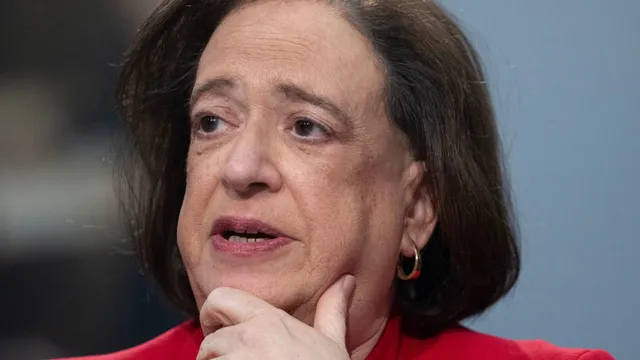
In a recent address at a judicial conference in Bellevue, Washington, U.S. Supreme Court Justice Elena Kagan emphasized the independence of the Supreme Court, despite its conservative majority. Kagan, one of the three liberal justices on the court, argued that the court has not simply acted as a rubber stamp for President Donald Trump, even though it has sided with his administration in many cases, particularly regarding immigration and executive power. She highlighted significant rulings where the court rejected Trump's policies, such as the decisions against his emergency tariffs and efforts to eliminate birthright citizenship for children of undocumented immigrants. Kagan's remarks come at a time when the court has faced scrutiny over its alignment with the Trump administration. While the court has upheld many of Trump's policies, Kagan pointed out that it has also checked the executive branch on critical issues. She noted that Chief Justice John Roberts has also pushed back against the perception that the justices are merely political actors, reinforcing the idea that the court operates independently of political pressures. During her speech, Kagan reflected on a historic moment when Trump attended oral arguments regarding his birthright citizenship order, marking the first time a sitting president has done so. She described the event as largely inconsequential for the justices, who treated Trump like any other audience member. Kagan's comments underscore her belief that the court's role is to interpret the law rather than serve the interests of the current administration. Kagan's perspective is significant as it highlights the ongoing debate about the role of the Supreme Court in American democracy. The court's decisions can have far-reaching implications for policy and governance, and Kagan's insistence on its independence is a reminder of the judiciary's critical function in maintaining checks and balances within the government. As the court continues to navigate complex legal issues, Kagan's insights serve as a call for the public to recognize the importance of judicial independence in upholding the rule of law.

Context

The Supreme Court has played a pivotal role in shaping the legal landscape surrounding former President Donald Trump's policies during his administration. Various decisions have addressed key issues such as immigration, healthcare, and executive power, reflecting the contentious nature of Trump's governance. The Court's rulings have often been closely divided, highlighting the ideological divides among the justices and the broader political implications of these decisions. As the nation grappled with the implications of Trump's policies, the Supreme Court's interpretations have provided critical legal clarity and set important precedents for future administrations. One of the most significant areas of litigation involved Trump's immigration policies, particularly the travel ban targeting several predominantly Muslim countries. The Supreme Court ultimately upheld the ban in a 5-4 decision, ruling that the president had broad authority to regulate immigration and national security. This ruling underscored the Court's deference to executive power in matters of national security, while also igniting debates about religious discrimination and the limits of presidential authority. The decision was emblematic of the Court's willingness to navigate complex social issues while balancing the interests of national security and civil rights. Another critical area of focus was the Affordable Care Act (ACA), which Trump sought to dismantle. The Supreme Court, in a landmark 2020 decision, upheld the ACA, affirming the constitutionality of its key provisions. This ruling not only preserved healthcare coverage for millions of Americans but also reinforced the principle that significant legislative changes require careful judicial scrutiny. The Court's decision reflected a commitment to maintaining established legal precedents, even in the face of aggressive attempts to overturn them by the executive branch. Overall, the Supreme Court's decisions on Trump's policies have had lasting implications for American law and governance. The Court's rulings have not only shaped the immediate legal landscape but have also set the stage for future legal battles over executive power and civil rights. As the nation continues to navigate the complexities of governance and the rule of law, the Supreme Court remains a crucial arbiter in the ongoing dialogue about the limits and responsibilities of presidential authority.