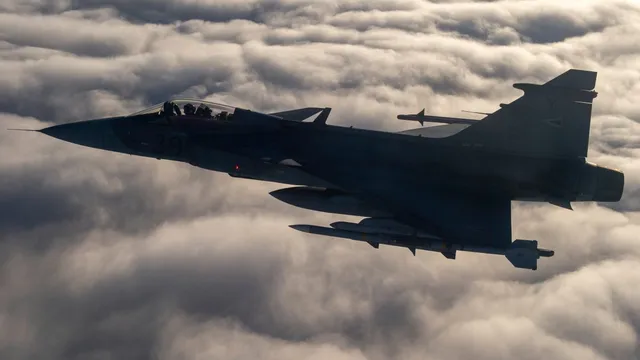
On July 4, 2026, Hungary scrambled two fighter jets to investigate a Cathay Pacific Airbus A350 that lost contact with air traffic control while flying in NATO airspace. The flight, CX257, was en route from Hong Kong to London Heathrow Airport and was still within Romanian airspace when the communication failure occurred. The Hungarian Minister of Defense, Romulusz Ruszin-Szendi, reported that the NATO Quick Reaction Alert system was activated due to the incident, which raised concerns about the safety of the aircraft and its passengers. Fortunately, the safety of the plane and personnel onboard was not compromised, and an investigation is currently ongoing. The Hungarian air force's Saab Gripen fighters, based in Kecskemét, were deployed and made visual contact with the airliner shortly after takeoff. Following the interception, contact with air traffic control was re-established, allowing the aircraft to continue its journey. This incident marked the second time in two days that NATO's rapid response system had been triggered, highlighting the ongoing vigilance and readiness of NATO forces to respond to potential threats in the airspace of its member countries. Just two days prior, a similar QRA mission was conducted over the Norwegian Sea, where two F-35 fighters from the Royal Air Force intercepted a Russian Bear-F submarine hunter that had been making low-altitude passes over the UK's aircraft carrier, HMS Prince of Wales. NATO Air Command emphasized the importance of maintaining air policing missions and national QRA assets to protect the airspace of one billion people across the alliance.