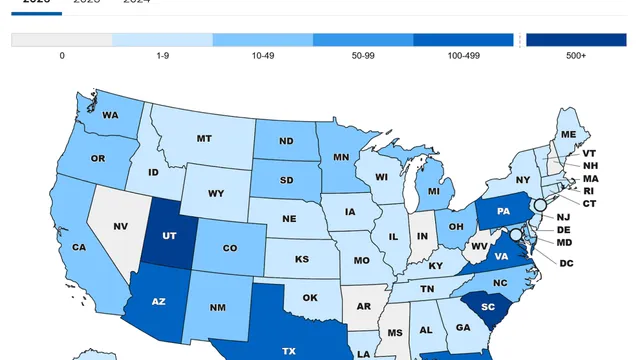
In the United States, confirmed measles cases have surged to their highest level in over three decades, with 2,318 cases reported so far this year. This alarming increase is attributed to declining vaccination rates and a series of outbreaks, as highlighted by data from the Centers for Disease Control and Prevention (CDC). The current figure surpasses the total number of cases recorded in 2025, which was 2,289, and marks the highest annual total since 1991. The resurgence of measles, a disease that was declared eliminated in the U.S. in 2000, has raised concerns among public health officials, particularly as 93 percent of the confirmed cases are linked to outbreaks. The CDC has reported 35 new outbreaks this year, with South Carolina and Utah being the states with the highest number of cases, at 670 and 522 respectively. Children and teenagers are disproportionately affected, accounting for approximately 69 percent of confirmed infections among individuals aged 19 and younger. The decline in vaccination rates is particularly concerning, as MMR vaccine coverage among kindergarten students fell from 95.2 percent during the 2019-20 school year to 92.5 percent during the 2024-25 school year. Health experts emphasize that herd immunity requires around 95 percent coverage to prevent widespread transmission of the virus. The CDC has also noted that international travel remains a significant factor in introducing the virus into under-vaccinated communities. The resurgence of measles has sparked political debate and scrutiny of federal health leadership, with calls for the resignation of HHS Secretary Robert F. Kennedy Jr. following the release of the data. Critics have pointed to international travel and border policies as contributing factors to the outbreak. As surveillance continues, federal officials are urging the public to stay up to date on immunizations, stressing that the two-dose MMR vaccine is the most effective defense against this highly contagious virus.