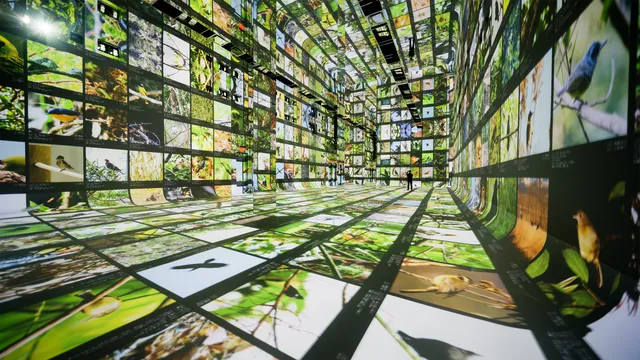
In the United States, digital artist Refik Anadol has co-founded Dataland, which he describes as the world's first museum dedicated to AI art. This innovative space, located in Los Angeles, showcases Anadol's unique approach to art, where he utilizes AI algorithms to transform vast amounts of data into immersive installations of light and sound. Over the past decade, Anadol has developed his craft by feeding images and sounds from various sources, including museum archives and personal experiences, into a custom AI model. This process results in captivating three-dimensional art that challenges traditional notions of creativity.
Anadol's recent collaboration with renowned soccer player Lionel Messi exemplifies the potential of AI in art. By using match footage, biometric data, and movement tracking, Anadol reconstructed Messi's memories of a pivotal goal scored in 2009. This project highlights the intersection of sports and art, showcasing how technology can bridge different fields and create new forms of expression. Anadol's work has garnered significant attention, positioning him as a prominent figure in the contemporary art world, akin to Messi's status in sports.
The artist's installation titled "Unsupervised" was notably acquired by the Museum of Modern Art in New York, marking a significant milestone as the first generative AI artwork to be included in its permanent collection. This acquisition underscores the growing acceptance and recognition of AI-generated art within prestigious institutions. Anadol's innovative ideas have attracted support from organizations like Google Arts & Culture, which has been backing his projects for nearly a decade, including artist residencies at Dataland.
Anadol's exploration of AI art raises philosophical questions about creativity and collaboration. He posits that while machines do not dream, they serve as collaborators in the artistic process. This perspective invites a broader discussion about the role of technology in art and whether machines can eventually develop their own creative expressions. As Anadol continues to push the boundaries of what is possible with AI, the future of art may be shaped by these collaborations between humans and machines.