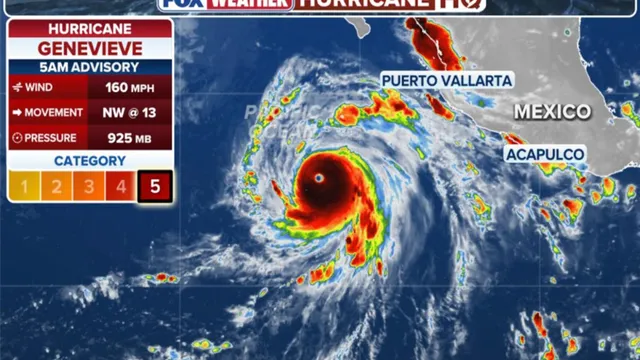
On July 27, 2026, Hurricane Genevieve was reported to be a major hurricane in the Pacific Ocean, situated far from land. The National Hurricane Center indicated that Genevieve briefly reached Category 5 status, marking the first occurrence of such intensity in the East Pacific region in two years. At that time, the hurricane was located approximately 505 miles southwest of the southern tip of the Baja California peninsula, moving northwest at a speed of 12 mph. The storm was characterized by maximum sustained winds of 145 mph, which posed potential threats to coastal areas despite being far from land.
While Genevieve was maintaining its strength, Tropical Storm Fausto was simultaneously weakening as it approached Hawaii. Fausto had maximum sustained winds of 70 mph and was located about 415 miles east-northeast of Hilo, Hawaii, traveling west-northwest at 16 mph. Although Fausto was expected to pass north of Hawaii, forecasters warned residents to remain vigilant due to the potential impacts of the storm, including large surf and strong currents affecting the east-facing shores of the Hawaiian Islands.
The National Hurricane Center also noted that swells generated by Genevieve were likely to create life-threatening surf and rip current conditions along parts of Mexico's southwestern coast and the Baja California peninsula. Despite the absence of coastal watches or warnings at the time, the situation was being closely monitored as Genevieve was expected to fluctuate in intensity before beginning to weaken later in the week.
The simultaneous occurrence of these two storms highlighted the dynamic nature of weather patterns in the Pacific region. While Genevieve posed a significant threat due to its intensity, the weakening of Fausto indicated the unpredictable nature of tropical storms and hurricanes. As both storms progressed, the focus remained on ensuring the safety of residents in affected areas, particularly in Hawaii, where the impacts of Fausto were being felt through increased surf and strong currents.