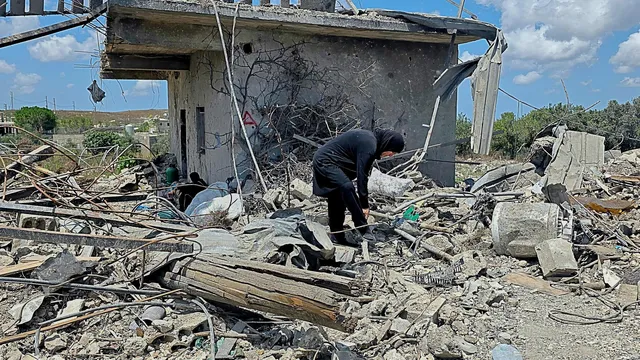
In southern Lebanon, the Lebanese army has recently accused Israel of hindering its efforts to establish security in the region. This accusation comes after the Lebanese military deployed troops to the first of three designated 'pilot zone' villages, following a United States-backed agreement aimed at facilitating the phased withdrawal of Israeli forces. The agreement was signed last month, but the Lebanese army has reported ongoing Israeli shelling and clearance operations that are preventing their full deployment and the return of displaced residents to their homes.
The three pilot zones identified for the initial phase of Israeli withdrawal include Zawtar al-Gharbiya, Froun, and Srifa. Despite the agreement, concerns have been raised regarding the absence of a clear exit schedule for Israeli forces. Reports indicate that parts of western Zawtar, Tibnit, and Nabatieh al-Fawqa continue to experience Israeli gunfire, even as civilians attempt to return to their homes. The Lebanese military has expressed that these ongoing assaults are detrimental to their operational capabilities and the safety of returning residents.
In addition to the military actions, the Israeli army has been reported to conduct bulldozing, shelling, and combing operations in various locations, including Nabatieh, Hdda, Kunin, and Bint Jbeil. These actions have resulted in significant destruction, including the blowing up of a water project in Markaba and the razing of olive trees and farmland in Aitaroun. The situation has left many displaced residents returning to homes that are now in ruins, highlighting the dire humanitarian impact of the ongoing conflict.
The Israeli military has justified its presence in southern Lebanon by citing the need to combat Hezbollah, an Iran-backed armed group that has rejected the US-brokered agreement and demands Israel's unconditional withdrawal. The tensions have escalated further, with fighting reigniting in March after Hezbollah launched rockets at Israel in response to perceived threats from the US-Israel alliance against Iran. The recent violence has resulted in thousands of casualties, including both military personnel and civilians, underscoring the ongoing instability in the region.