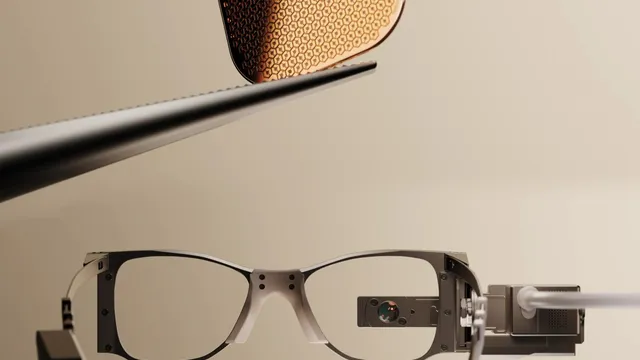
In recent months, Science Corporation, a US-based neural engineering company, has achieved a significant milestone by obtaining EU approval for its innovative vision-restoring implant, known as Prima. This device is designed to assist individuals suffering from geographic atrophy, a condition that leads to the loss of central vision. The Prima implant is a thin photovoltaic sub-retinal device that works in conjunction with specialized glasses that project near-infrared light. This light is converted into electrical stimulation signals, allowing users to regain some degree of vision. The device also features a 'zoom-in' capability, enabling users to magnify letters for improved readability.
Clinical trials have demonstrated the effectiveness of the Prima implant, with a study published in the New England Journal of Medicine revealing that 84% of participants were able to read letters, numbers, and words again after receiving the implant. The study involved 38 patients across 17 clinical sites in five countries, and 80% of those tested reported significant improvements in visual acuity. This breakthrough represents a major advancement in the treatment of vision loss, particularly for those who have previously had no viable options.
Max Hodak, co-founder and CEO of Science Corporation, expressed pride in being the first brain-computer interface (BCI) company to receive a CE marking for a device aimed at restoring detailed form vision. He emphasized the importance of this development for patients who have lost their independence due to vision loss. The company is actively working to make the Prima implant accessible and reimbursable for patients, with plans for country-specific reimbursement applications and clinical site activations across Europe. The first commercial implant is expected to be available in Germany soon.
The lead author of the clinical trial paper, Professor Frank Holz, MD, who chairs the Department of Ophthalmology at the University Hospital of Bonn in Germany, highlighted the significance of the CE marking, stating that it marks an exciting moment for patients. He noted that the clinical trials have shown that the Prima implant can restore functional central vision in patients who had previously lost it completely. This development not only offers hope to those affected by geographic atrophy but also represents a significant step forward in the field of vision restoration technology.