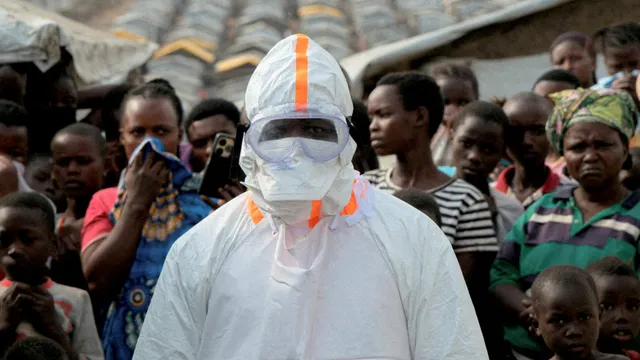
In Congo, the ongoing Ebola outbreak has led to significant challenges for health and aid workers, particularly in Ituri province, which has been identified as the worst-affected region. Authorities reported that at least a dozen attacks on health facilities and workers have occurred, severely hampering the response efforts. Many of these attacks have been attributed to angry mobs who have stormed treatment centers and targeted response teams in the field. The situation has been exacerbated by health workers going on strike due to unpaid salaries, further complicating the already strained response to what has been declared the fastest-growing Ebola outbreak on record.
As of the latest reports, there have been 2,181 recorded cases of Ebola, with 864 resulting in death. The Bundibugyo virus, responsible for this outbreak, is less common than other strains of the virus, and there is currently no approved vaccine or treatment available. The attacks on health facilities are not limited to healthcare teams; they also affect frontline workers, including burial teams. Dr. Adelard Lufongola, operations manager for the Ebola response, highlighted that members of various response teams have been held captive in some health zones, and burial teams have faced threats in cemeteries and communities.
The violence has led to a significant concern among humanitarian actors, with U.N. spokesman Stéphane Dujarric stating that the escalating violence is impacting the Ebola response and limiting access to treatment centers and surrounding communities. In recent days, health and aid workers have been seen leaving remote communities considered hot spots and relocating to Bunia, which is perceived as a safer area. This shift raises fears that the ongoing efforts to combat the outbreak may be jeopardized, as civil society leaders express concerns about the potential departure of aid workers from the area.
The most recent attack occurred on Wednesday, when residents in the town of Nyakunde attacked a hospital and an Ebola treatment center nearby. Following the attack, treatment and care resumed at the center the next day, but concerns about the risk of transmission amid the chaos remain. Christophe Munyanderu, a civil society leader in Ituri's Irumu territory, expressed fears that the aid workers involved in combating the outbreak might leave the area, which would complicate efforts to eradicate the outbreak. The situation in Ituri province continues to be precarious, with the safety of health workers and the effectiveness of the Ebola response hanging in the balance.