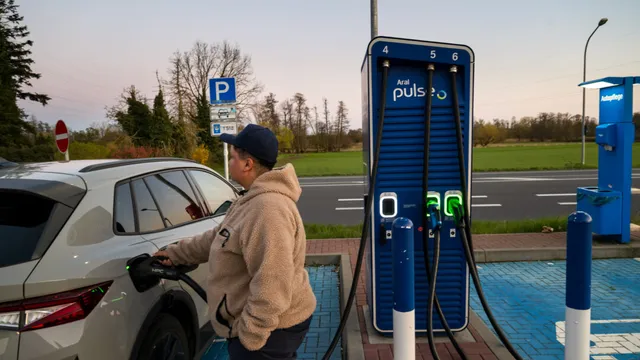
In the first half of 2026, new car registrations in the European Union increased by 5.7 percent, driven by a growing demand for electric and hybrid vehicles. The European Automobile Manufacturers’ Association (ACEA) reported that battery-electric cars accounted for over 20 percent of all new registrations, with hybrid-electric vehicles being the most popular choice among buyers. This growth occurred despite ongoing geopolitical challenges affecting the automotive market. Major national markets such as Germany, France, Italy, and Spain all experienced significant increases in registrations, with Germany leading at a 15.7 percent rise in June alone.
The shift towards electric vehicles has been influenced by various factors, including rising fuel prices due to geopolitical tensions in the Middle East, which have heightened consumer interest in more affordable and sustainable alternatives. The ACEA noted that petrol car registrations fell by 17.2 percent in the first half of 2026, with France experiencing the steepest decline at 34.2 percent. Diesel registrations also saw a decrease of 16.5 percent, indicating a broader trend away from traditional fuel sources.
Chinese automakers have been rapidly expanding their presence in the European market, with brands like BYD, Chery Automobile, SAIC Motor, and Leapmotor reporting substantial year-on-year growth. SAIC Motor, which owns the MG brand, registered a 19.1 percent increase, while Leapmotor's registrations surged by an impressive 526.7 percent. This expansion is expected to continue, with projections indicating that Chinese brands' registrations in Europe will exceed 1.3 million vehicles in 2026, a significant increase from just over 50,000 in 2020.
Despite the challenges faced by new entrants in the market, established European automakers like Volkswagen Group and Stellantis continue to maintain strong market shares. Volkswagen Group registered nearly 1.56 million vehicles, while Stellantis followed with 965,475 registrations. The competitive landscape is shifting, with analysts suggesting that the focus will increasingly be on Germany and France, where brand perception and dealer networks play crucial roles in consumer decisions. As the market evolves, the demand for electric and hybrid vehicles is likely to grow, reshaping the future of the automotive industry in Europe.