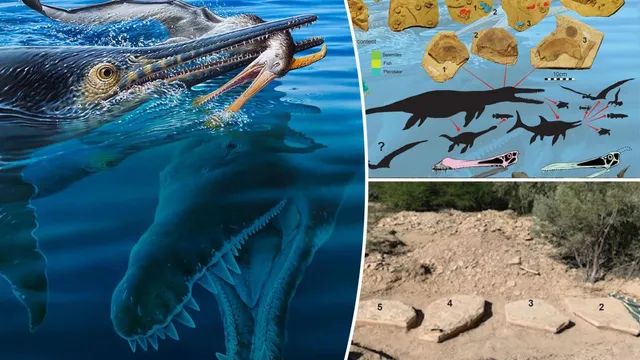
The Cretaceous period, spanning from approximately 145 to 66 million years ago, was a time of significant evolutionary advancements in marine reptiles. This era witnessed the dominance of various groups of marine reptiles, including ichthyosaurs, plesiosaurs, and mosasaurs, which adapted to life in the oceans. These reptiles exhibited a range of sizes and forms, showcasing remarkable adaptations that allowed them to thrive in diverse marine environments. Ichthyosaurs, resembling modern dolphins, were streamlined for speed and agility, while plesiosaurs, with their long necks and broad bodies, were well-suited for ambush predation. Mosasaurs, the apex predators of the late Cretaceous, evolved from terrestrial lizards and became highly specialized for life in the water, showcasing powerful jaws and a robust body structure.
The ecological roles of these marine reptiles were varied and complex. Ichthyosaurs primarily fed on fish and squid, utilizing their speed to chase down prey. Plesiosaurs, on the other hand, likely employed a different hunting strategy, using their long necks to reach out and capture prey from a distance. Mosasaurs, being larger and more powerful, dominated the food chain, preying on smaller marine reptiles, fish, and even other mosasaurs. The diversity of these marine reptiles reflects the rich and dynamic ecosystems of the Cretaceous seas, which were teeming with life, including various species of fish, invertebrates, and other marine organisms.
The fossil record provides crucial insights into the evolution and extinction of these marine reptiles. Fossils have been discovered in various locations worldwide, revealing a timeline of their existence and adaptations. For instance, the decline of ichthyosaurs in the late Cretaceous is believed to be linked to changes in oceanic conditions and competition with other marine reptiles. The mosasaurs, which emerged later in the Cretaceous, became the dominant marine predators, showcasing a rapid diversification that coincided with the decline of other marine reptiles. The extinction event at the end of the Cretaceous, likely caused by a combination of volcanic activity and an asteroid impact, led to the demise of these remarkable creatures, marking the end of an era in marine reptile evolution.
In conclusion, the Cretaceous marine reptiles represent a fascinating chapter in the history of life on Earth. Their adaptations, ecological roles, and eventual extinction provide valuable insights into the evolutionary processes that shape biodiversity. The study of these ancient creatures not only enhances our understanding of marine ecosystems during the Cretaceous but also informs current conservation efforts by highlighting the fragility of marine life in the face of environmental changes. As researchers continue to uncover new fossil evidence and refine our understanding of these reptiles, we gain a deeper appreciation for the complexity and interconnectedness of life in our oceans.