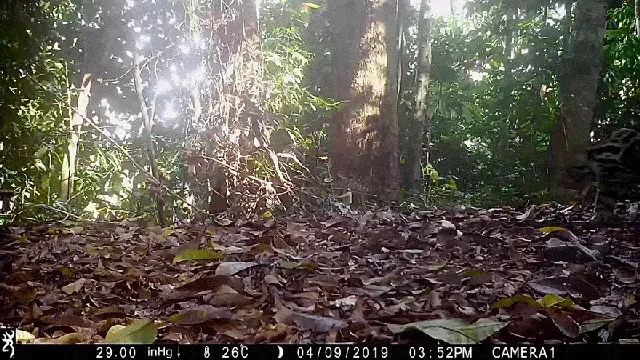
In Malaysian Borneo, a recent study has provided unprecedented insights into the lives of the Sunda clouded leopard, a species known for its elusive nature. Conducted over a span of 15 years, the research involved capturing images and data from three reserves in the state of Sabah. The study observed 52 adult individuals, including 30 males and 22 females, shedding light on their behavior and habitat preferences. Researchers noted that female Sunda clouded leopards are particularly difficult to capture on camera, as they tend to spend much of their time in trees, unlike males who are more frequently seen on the ground marking their territories.
The lead author of the study, Katharina Kasper, a biologist with the Polish Academy of Sciences and the Leibniz Institute for Zoo and Wildlife Research, highlighted the challenges in studying female leopards. Their slender physique and fluffy tails aid in their arboreal lifestyle, making them less visible to researchers. The study's findings also revealed that these big cats may live up to 8.5 years in the wild, a new record for the species. This information is crucial as it helps to understand the longevity and survival of the Sunda clouded leopard in its natural habitat.
The research was a collaborative effort involving experts from the global wild cat conservation organization Panthera and the Sabah Forestry Department. The data collected over the years has already influenced the direction of ongoing research, allowing scientists to focus on factors that affect the disturbance and survival of this vulnerable species. The Sunda clouded leopard is classified as vulnerable by the International Union for Conservation of Nature, indicating that it faces threats that could lead to its extinction if not addressed.
As conservation efforts continue, the insights gained from this study will play a vital role in shaping strategies to protect the Sunda clouded leopard and its habitat. Understanding their behavior, habitat use, and longevity is essential for developing effective conservation measures. The study not only contributes to the scientific knowledge of this elusive species but also emphasizes the importance of preserving the rich biodiversity of the rainforests of Borneo and Sumatra.