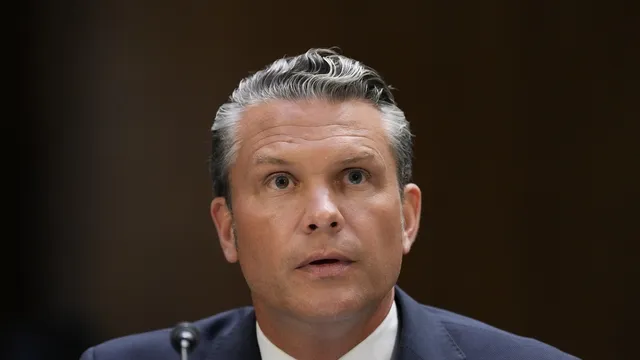
Hegseth estimates Iran war costs at $37.5 billion
military conflicts
controversial
impactful

Hegseth estimates Iran war costs at $37.5 billion

102
(Update: )
country primarily in North America
country in Western Asia
U.S. Army veteran and Fox News contributor
  • Defense Secretary Pete Hegseth testified that the U.S. war against Iran has cost $37.5 billion so far.
  • The proposed supplemental funding request includes $67 billion specifically for the conflict in Iran.
  • Lawmakers express concerns about the potential for a prolonged military engagement and the implications of continued funding.
Share opinion
10

Story

In Washington, on July 21, 2026, Defense Secretary Pete Hegseth testified before the Senate Appropriations Committee regarding the ongoing U.S. military campaign against Iran. During his testimony, he provided an updated cost estimate of $37.5 billion for the conflict, which has seen significant military engagement since its inception. Hegseth emphasized the need for additional funding to sustain military operations and ensure the readiness of U.S. forces. The proposed supplemental funding request from President Donald Trump totals $80 billion, with $67 billion earmarked specifically for the conflict in Iran. Hegseth's remarks came amid growing concerns from lawmakers about the potential for a prolonged military engagement, with some senators warning against the risks of entering another 'forever war.' The hearing was marked by protests and interruptions, reflecting the contentious nature of the funding request and the broader debate over U.S. military involvement in the region. Hegseth faced scrutiny not only for the war's financial implications but also for his leadership within the Department of Defense, as senators raised questions about military promotions and the Pentagon's handling of service member injuries. The conflict has resulted in the deaths of 17 U.S. service members and over 400 injuries, raising further concerns about the human cost of the ongoing military operations. As the Senate considers the funding request, the political landscape remains divided, with many Americans expressing disapproval of the current administration's handling of the situation in Iran.

Context

The history of US-Iran relations is marked by a complex interplay of political, economic, and cultural factors that have evolved significantly over the decades. Initially, the relationship was relatively amicable, particularly during the early 20th century when the United States supported the modernization efforts of Iran under the Pahlavi dynasty. This cooperation was largely driven by mutual interests, including the US's desire for access to Iranian oil and Iran's need for military and economic support. However, the relationship began to sour in the 1950s, particularly after the CIA-backed coup in 1953 that overthrew Prime Minister Mohammad Mossadegh, reinstating the Shah, Mohammad Reza Pahlavi. This event sowed deep-seated resentment among many Iranians, who viewed the US as an imperialist power interfering in their sovereignty. The 1979 Iranian Revolution marked a significant turning point in US-Iran relations. The overthrow of the Shah, who was a close ally of the United States, led to the establishment of the Islamic Republic under Ayatollah Khomeini. The subsequent hostage crisis, where 52 American diplomats and citizens were held for 444 days, further deteriorated relations and led to the imposition of economic sanctions on Iran. The US's support for Iraq during the Iran-Iraq War in the 1980s further entrenched animosity, as Iran viewed this as a direct threat to its sovereignty and security. Throughout the late 20th century, the US continued to label Iran as part of the