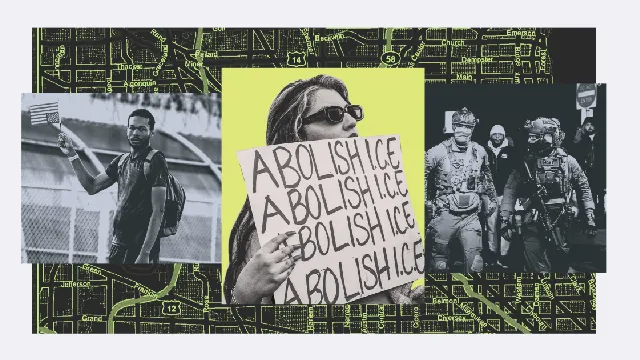
In the United States, the role of Immigration and Customs Enforcement (ICE) has significantly changed under the Trump administration, evolving from a traditional immigration enforcement agency into a political instrument used by the White House. This transformation has raised concerns among community members and law enforcement officials alike, as many believe that the agency is now targeting long-standing members of communities who pose no public safety threat. The collaboration between ICE and local law enforcement has led to a chilling effect in immigrant communities, where individuals fear reporting crimes or seeking help due to the potential for deportation.
The situation has been exacerbated by the lack of due process for many individuals detained by ICE. Under the current administration, a significant number of people held in detention facilities do not have the right to a court hearing to contest their detention. This has resulted in a system where individuals can be held indefinitely without the ability to communicate with legal representatives or family members, leading to tragic outcomes, including deaths due to lack of medical care. The conditions in these facilities have been described as nightmarish, with detainees feeling hopeless and trapped.
Community activists have taken it upon themselves to educate local businesses and residents about their rights in the face of ICE enforcement. They have organized patrols to monitor ICE activities and provide support to those at risk of deportation. These grassroots efforts highlight the resilience of communities facing aggressive immigration policies and the importance of solidarity in protecting vulnerable populations. The emotional toll of this work is significant, as activists often witness the direct impact of ICE actions on families and individuals.
The implications of ICE's transformation extend beyond individual cases; they pose a threat to the democratic fabric of the nation. The agency's use as a political tool undermines trust between immigrant communities and law enforcement, making it difficult for police to effectively serve and protect all residents. As the situation continues to evolve, the need for comprehensive immigration reform and a reevaluation of ICE's role in society becomes increasingly urgent.