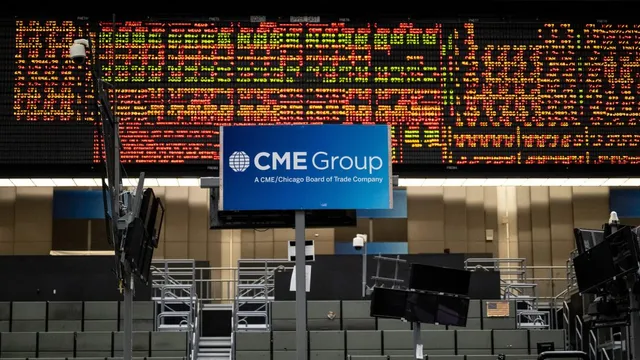
In the United States, CME Group Inc. is set to launch single-stock futures, a financial instrument that allows investors to hedge or speculate on over 50 of the largest companies in the country. This launch is scheduled for Monday, July 27, 2026, and aims to attract both retail and institutional investors. The contracts will be cash-settled based on the closing prices of the stocks they are tied to, providing a simpler alternative to options trading, which often involves complex concepts like the Greeks. The introduction of these futures comes at a time when retail trading is on the rise, and the market is experiencing a surge in hot IPOs with limited share availability. Tim McCourt, the global head of equities, FX, and alternative products at CME, expressed optimism that this new tool will bring many new traders into their ecosystem.
The single-stock futures will be available for trading five days a week, 23 hours a day, which is significantly longer than the traditional equity market hours of 9:30 a.m. to 4 p.m. The contracts will be offered in two sizes: the larger contracts will be based on 100 shares of stock, while the micro futures will be based on 10 shares. Notably, the micro futures will include major tech companies, referred to as the Mag7, along with other significant firms like Micron Technology Inc., Pfizer Inc., and Walmart Inc. This launch marks a significant moment in the history of single-stock futures in the U.S., which have faced challenges in gaining traction since their initial introduction 24 years ago.
Historically, single-stock futures were banned for nearly two decades until regulations were established in 2000, allowing for their trading in 2002. However, they failed to attract sufficient interest and were eventually discontinued in 2020. In an effort to revive the market, regulators reduced the minimum capital required for trading these futures. In Europe, financial institutions have successfully utilized single-stock futures to enhance balance sheet efficiency, particularly during quarter-end and year-end reporting periods. They are also employed to manage long positions and hedge against short positions and net dividend risks.
Despite the potential benefits, trading in futures markets typically involves paying commissions, unlike many retail platforms for stocks and options that charge no fees. For single-stock futures to gain popularity among retail traders, it may require a push from discount brokers to offer these products and facilitate trading. Overall, the launch of single-stock futures by CME Group Inc. represents a strategic move to capitalize on the growing interest in retail trading and the evolving market landscape.