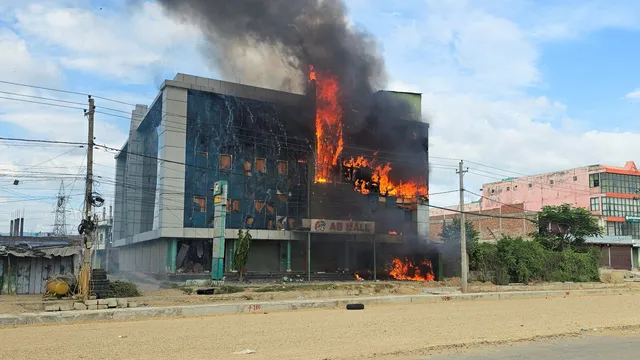
The history of Hindu-Muslim relations in Nepal is a complex tapestry woven through centuries of cultural, social, and political interactions. The roots of these relations can be traced back to the early medieval period when the region was influenced by various dynasties and empires. Hinduism has been the predominant religion in Nepal, shaping its cultural and social norms, while Islam, introduced through trade and migration, has also played a significant role in the country's history. The interactions between these two communities have been marked by periods of coexistence, cultural exchange, and, at times, conflict, reflecting the broader dynamics of South Asian history.
During the Malla period (12th to 18th centuries), Kathmandu Valley became a melting pot of various cultures, including Hindu and Muslim influences. The Malla kings were known for their religious tolerance, allowing both communities to flourish. This era saw the construction of significant architectural works that reflect a blend of Hindu and Islamic styles. However, the arrival of the Gorkha Kingdom in the 18th century marked a shift in the dynamics of Hindu-Muslim relations. The unification of Nepal under King Prithvi Narayan Shah led to the establishment of a more centralized Hindu state, which often marginalized Muslim communities, leading to tensions and a sense of alienation among them.
The 20th century brought significant changes to Nepal's political landscape, particularly with the end of the Rana regime in 1951 and the subsequent establishment of a democratic system. This period saw increased political participation from various ethnic and religious groups, including Muslims. However, the political landscape remained fraught with challenges, as the Hindu-majority state often struggled to accommodate the diverse identities within its borders. The civil conflict that erupted in the late 1990s further complicated Hindu-Muslim relations, as various groups sought representation and recognition in a rapidly changing society. The aftermath of the conflict led to a renewed focus on inclusivity and the need for dialogue between communities.
In recent years, the rise of identity politics and the push for federalism in Nepal have opened new avenues for addressing historical grievances and fostering better relations between Hindus and Muslims. The 2015 Constitution of Nepal recognized the country as a secular state, which was a significant step towards ensuring equal rights for all religious communities. However, challenges remain, as issues of discrimination, social inequality, and political representation continue to affect the Muslim community. Efforts to promote interfaith dialogue and cooperation have gained momentum, with various organizations working towards building bridges between the two communities. The future of Hindu-Muslim relations in Nepal will depend on the commitment of both communities to engage in constructive dialogue, promote mutual respect, and work towards a more inclusive society.