Death toll rises to 34 after powerful earthquake in Japan
military conflicts
tragic
catastrophic

Death toll rises to 34 after powerful earthquake in Japan

11
(Update: )
island country in East Asia
city in Kumamoto prefecture, Japan
  • A powerful earthquake struck Kumamoto, Japan, causing widespread destruction and loss of life.
  • As search operations continued, the death toll rose to 34, with many residents still missing.
  • The community faces significant challenges in recovery, with thousands without water and electricity.
Share opinion
1

Story

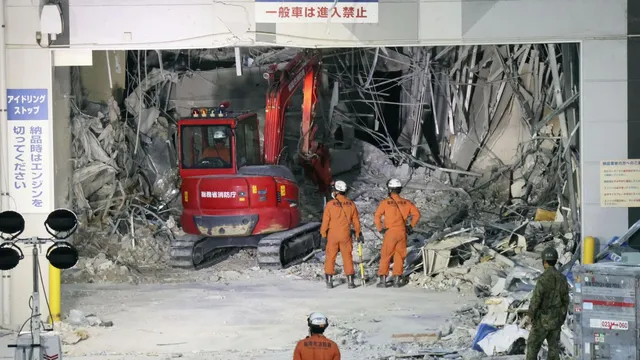
In Kumamoto, Japan, a powerful earthquake struck, leading to significant destruction and loss of life. The earthquake caused an explosion at a mall, toppled a factory chimney, and flattened numerous homes. As of Friday, the Kumamoto prefectural government reported that the death toll had risen to 34, with search operations ongoing for missing individuals. Thousands of residents were left without water and electricity, exacerbating concerns about health issues due to the sweltering heat. The quake's impact was particularly severe in the town of Hikawa, where over 800 homes were either destroyed or damaged, leaving many residents fearful of returning indoors. Search efforts continued into the fourth day, focusing on the collapsed Aeon Mall shopping center in Kashima, where the most serious damage occurred. The mall was crowded with approximately 3,000 shoppers at the time of the quake, and while some were evacuated, others remained inside when the explosion occurred. Authorities confirmed that seven people died at the mall, and 11 were rescued, but the total number of missing individuals remained uncertain. Local transportation services were disrupted, with some bullet trains resuming operations but others still suspended due to damage. The aftermath of the earthquake has raised concerns about the well-being of those affected, particularly as many residents are without basic utilities. In Hikawa, officials reported that a significant portion of the town's homes were impacted, leading to fears among residents about the safety of their living conditions. One resident, Ayako Sudo, expressed her anxiety about returning to her wooden house, recalling her experience of sleeping in her car for two weeks following a previous quake in 2016. The ongoing heat and lack of resources have made the situation even more dire for those displaced by the disaster. As search and rescue operations continue, the full extent of the damage and the number of casualties remain unclear. The Kumamoto prefectural government is working to assess the situation and provide assistance to those affected. The community is coming together to support one another during this challenging time, but the road to recovery will be long and arduous as they face the aftermath of this devastating earthquake.

Context

The Kumamoto earthquake, which struck on April 14, 2016, had a profound impact on local infrastructure in the Kumamoto Prefecture of Japan. The earthquake, measuring 7.0 on the Richter scale, caused significant damage to buildings, roads, and utilities, leading to widespread disruption in the region. The immediate aftermath saw a considerable number of structures rendered uninhabitable, including schools, hospitals, and residential buildings. The destruction of these essential facilities not only affected the daily lives of residents but also posed challenges for emergency response and recovery efforts. The local government faced the daunting task of assessing the damage and prioritizing repairs to restore normalcy to the affected communities. In addition to structural damage, the earthquake severely impacted transportation infrastructure. Major roads and highways experienced significant cracks and landslides, hindering access to and from the affected areas. Public transportation systems, including rail services, were also disrupted, complicating evacuation efforts and the delivery of aid. The damage to infrastructure extended to utilities, with many residents experiencing prolonged outages of electricity, water, and gas services. The restoration of these essential services became a priority for local authorities, as they were critical for both immediate relief efforts and long-term recovery. The economic implications of the earthquake were substantial, with local businesses suffering losses due to property damage and decreased consumer activity. The disruption of supply chains and transportation routes further exacerbated the economic challenges faced by the region. Recovery efforts required significant financial investment from both the government and private sectors to rebuild infrastructure and support affected businesses. The earthquake highlighted the need for improved disaster preparedness and resilience planning, prompting discussions on how to better equip the region to handle future seismic events. In conclusion, the impact of the Kumamoto earthquake on local infrastructure was extensive and multifaceted, affecting not only physical structures but also the social and economic fabric of the community. The lessons learned from this disaster have underscored the importance of investing in resilient infrastructure and comprehensive disaster response strategies. As the region continues to recover, ongoing efforts to enhance infrastructure resilience will be crucial in mitigating the effects of future earthquakes and ensuring the safety and well-being of residents.