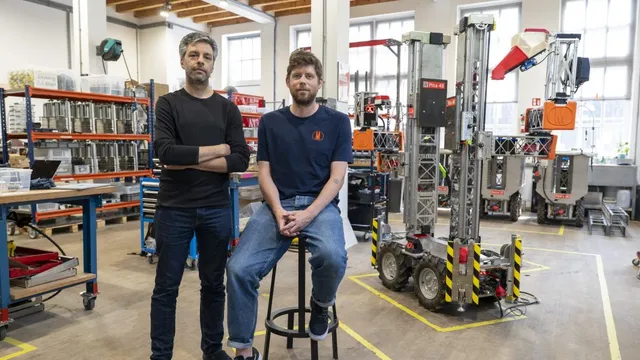
In early 2024, Monumental, a construction robotics company founded by Salar al Khafaji, successfully raised $32 million in a Series B funding round led by Khosla Ventures. This funding follows a previous $25 million round in February 2024, co-led by Plural and Hummingbird. The new capital is earmarked for launching operations in the U.S. and scaling the company's existing fleet of autonomous bricklaying robots in Europe. Monumental's robots are designed to address the significant labor shortages in the construction industry, which has seen little productivity improvement over the past five decades.
The construction sector, which accounts for 13% of global GDP, is facing a critical shortage of workers, with estimates indicating a need for 349,000 new workers in the U.S. by 2026. The housing market is also grappling with a shortfall of 3 to 4 million units. Al Khafaji emphasizes that even with a fleet of 10,000 robots, the company would only begin to address a fraction of this labor gap. Monumental's approach is to provide contractors with a familiar pricing model, charging per brick or per square meter, which simplifies the integration of their technology into existing workflows.
The company currently operates over 150 robots on live job sites across Europe, and its entry into the U.S. market is strategically focused on states like Texas, Florida, Virginia, and Arizona, where construction activity is high and labor shortages are most acute. Monumental's technology aims to fill the labor void rather than displace existing workers, which is crucial in a market that is heavily influenced by union dynamics and tightening immigration policies.
The construction industry has historically been skeptical of new technologies, with many startups failing due to poor business models and high upfront costs. Monumental's strategy of using existing materials specified by contractors helps mitigate regulatory hurdles and builds trust in their technology. As the company prepares for its U.S. launch, it aims to expand its capabilities from bricklaying to more complex tasks, potentially revolutionizing the construction landscape in the coming years.