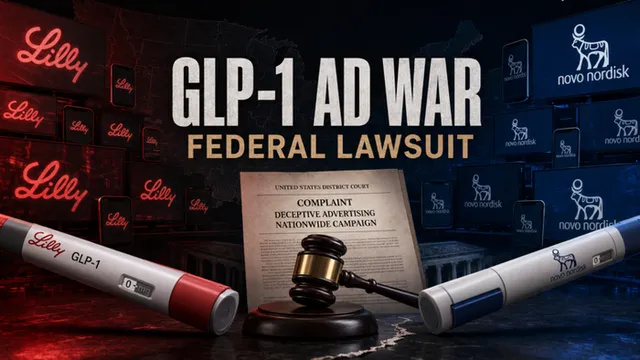
In the United States, Novo Nordisk has initiated legal action against Eli Lilly, alleging deceptive advertising practices related to their GLP-1 medications. The lawsuit was filed on July 21, 2026, in federal court in New Jersey. Novo claims that Eli Lilly's advertisements for its drugs, Zepbound and Mounjaro, mislead consumers by comparing the highest doses of Lilly's medications with lower doses of Novo's Wegovy and Ozempic. Novo argues that these comparisons are unfair and rely on outdated studies that do not include the recently approved 7.2-mg dose of Wegovy, which has shown significant weight loss results.
Novo's complaint highlights that there has not been a head-to-head clinical trial comparing the highest doses of Zepbound and Wegovy, which raises questions about the validity of the claims made in Lilly's advertisements. The lawsuit also points out that while Lilly's ads state that Wegovy's 7.2 mg was not tested in the studies, the omission of this information is misleading to consumers. Novo seeks a permanent injunction to stop Lilly from using these advertisements and demands a corrective advertising campaign to clarify the misleading information.
The legal battle comes at a time when both companies are competing for a share of the rapidly growing GLP-1 market, which is projected to exceed $120 billion by 2030. Novo Nordisk, which was the first to enter the obesity market with Wegovy, has seen its stock prices stagnate while Eli Lilly's stock has reached record highs, reflecting their competitive positions in the market. Novo is attempting to regain its footing under new leadership by expanding partnerships and launching new products, including an oral weight-loss drug.
As the market for GLP-1 medications continues to expand, the outcome of this lawsuit could have significant implications for both companies and their future advertising strategies. The legal proceedings will likely draw attention to the ethical considerations of pharmaceutical advertising and the importance of transparency in communicating drug efficacy to consumers.