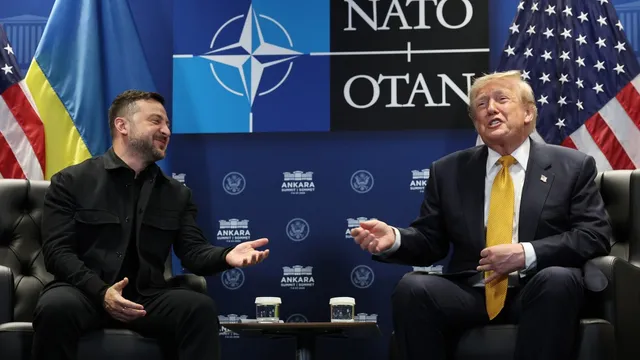
In the ongoing conflict between Russia and Ukraine, Representative Don Bacon, a Nebraska Republican and retired Air Force brigadier general, publicly criticized former President Donald Trump for his remarks regarding the war. During a recent meeting with Ukrainian President Volodymyr Zelensky, Trump suggested that Zelensky should simply 'end the war,' a statement that Bacon deemed 'embarrassing.' He emphasized that Russia is solely responsible for initiating the conflict, asserting that it is Vladimir Putin who invaded Ukraine. Bacon's comments reflect a broader concern among some Republican lawmakers about the implications of Trump's rhetoric on U.S. foreign policy.
The situation in Ukraine has been dire, with the conflict now entering its fifth year. Both Russia and Ukraine have engaged in extensive military actions, including drone and missile attacks, while diplomatic efforts to resolve the situation have stalled. The ongoing war has resulted in significant human costs, prompting discussions about military cooperation and sanctions against Russia. Recently, Zelensky visited Washington to engage in talks with U.S. officials, highlighting the importance of international support for Ukraine.
Bacon's criticism of Trump is particularly noteworthy as he is one of the few Republican voices openly challenging the former president's stance on Russia and Ukraine. His remarks come at a time when some conservatives are shifting their views, becoming more critical of Putin and more supportive of Ukraine. This change in tone among certain Republican lawmakers indicates a potential shift in the party's approach to foreign policy, especially regarding the ongoing conflict.
The White House has defended Trump's comments, stating that the former president's intention was to bring an end to the war due to its human cost. A White House official reiterated the administration's commitment to playing a constructive role in negotiating a settlement between Russia and Ukraine. However, Bacon's perspective underscores the complexities of U.S. involvement in the conflict and the challenges of navigating relationships with both Moscow and Kyiv. As the war continues, the need for a clear and unified stance among U.S. lawmakers becomes increasingly critical.