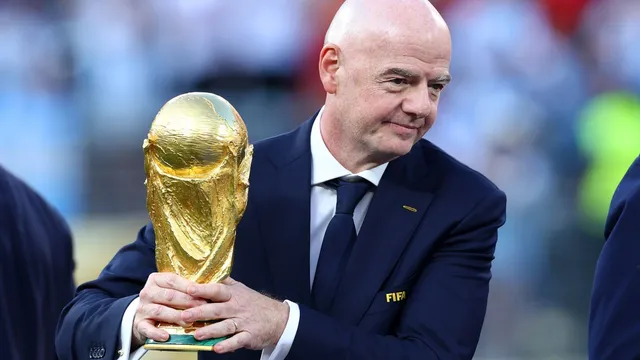
In late July 2026, FIFA President Gianni Infantino's proposal to sell a stake in the World Cup to private investors sparked significant backlash within the soccer community. The plan, which aimed to create a new subsidiary called FIFA Forward Enterprise to manage FIFA's commercial operations, was met with widespread dissent, particularly from UEFA's 55 member associations. They voted to boycott all FIFA competitions as long as the proposal remains active, marking a pivotal moment in Infantino's leadership. This revolt is seen as the most substantial challenge to his authority in a decade, reflecting deep divisions within the sport.
The proposal was first leaked to the press before its formal announcement on July 28, 2026. It included rights tied to both the men's and women's World Cups, as well as the Club World Cup. The backlash was not limited to UEFA; elite clubs that employ the players essential for FIFA's tournaments also expressed their discontent. Mark Pieth, a former head of FIFA's Independent Governance Committee and a long-time critic of Infantino, noted that the situation could lead to a significant turning point in FIFA's governance, akin to the fragmentation seen in boxing.
Despite the strong opposition from UEFA, there are indications that Infantino has built considerable support in other regions, particularly Africa, where FIFA Forward funding is crucial. This support complicates the potential for a full breakaway by UEFA, as the federation is not universally viewed as a moral authority. The Premier League's top teams, along with clubs like Real Madrid and Bayern Munich, could also refuse to release players for tournaments they deem excessive, further complicating FIFA's plans.
Infantino's previous attempts to alter the soccer calendar, such as his push for a biennial World Cup, were similarly rejected by UEFA and the European Club Association. The current situation highlights the ongoing tensions between FIFA's leadership and the interests of European football, raising questions about the future of international soccer governance. As the situation develops, the potential for a major rift in the sport looms, with both UEFA and elite clubs holding significant power to influence FIFA's direction.