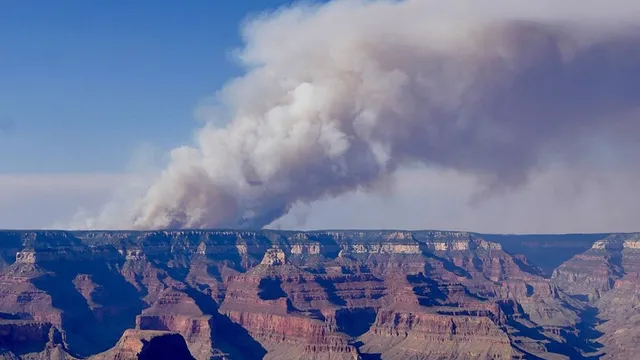
In the United States, a study published in Scientific Reports by researchers at the University of California, Santa Barbara's National Center for Ecological Analysis and Synthesis has revealed alarming findings regarding the risk of wildfires to historic landmarks. The researchers assessed every mappable site listed on the National Register of Historic Places, totaling 100,117 sites, and found that 3,446 of these sites are at severe risk of wildfire damage. This study highlights the growing threat to culturally significant locations, particularly as wildfires have increasingly devastated such sites across the country in recent years.
The study's findings are particularly concerning given the recent history of wildfires destroying notable historic properties. For instance, the Palisades Fire in January 2025 resulted in the loss of the Will Rogers Ranch House, while the Eaton Fire destroyed the Andrew McNally House. Additionally, the Dragon Bravo wildfire burned through Grand Canyon National Park, leading to the destruction of the Grand Canyon Lodge, which was originally built in 1927. These incidents underscore the vulnerability of historic structures, many of which are irreplaceable and hold significant cultural and historical value.
The researchers noted that many historic buildings face heightened risks due to their architectural features, such as combustible roofs and concealed spaces that can allow embers to enter. Furthermore, the study revealed that 90 percent of the listed resources are historic buildings and districts, which face unique challenges because they cannot be relocated and derive much of their significance from their original physical structures. The authors emphasized the need for on-site mitigation efforts, including vegetation management, structural hardening, and enhanced suppression capacity to protect these sites from wildfires.
Climate change is expected to exacerbate the wildfire threat to cultural heritage sites, as shifting wildfire dynamics may require additional mitigation and preservation measures in the future. Recent studies have indicated that fire weather severity is intensifying in various ecosystems, including western North America, and that the occurrence and intensity of wildfires are likely to continue increasing. The implications for historic landmarks are significant, as the loss of these properties not only affects local communities but also threatens national heritage and collective memory.