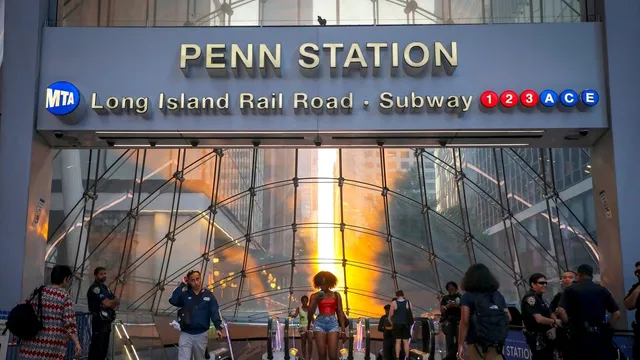
Penn Station, officially known as Pennsylvania Station, is a major transportation hub located in New York City. It serves as a critical junction for Amtrak, Long Island Rail Road (LIRR), and New Jersey Transit (NJT) services. The station was originally opened in 1910, designed by the architectural firms of McKim, Mead & White, and was celebrated for its grand Beaux-Arts style. The original structure was a monumental building that featured a vast waiting room, high ceilings, and a grand entrance, which made it one of the largest and most impressive train stations in the world at the time. The station was built to accommodate the increasing number of travelers and the growing importance of rail travel in the early 20th century, reflecting the peak of rail transportation in the United States.
However, the original Penn Station faced significant challenges over the decades, including the decline of rail travel and the rise of air travel. By the 1960s, the station was in a state of disrepair, and the decision was made to demolish the original structure to make way for the construction of the Madison Square Garden complex. This decision was met with widespread public outcry and is often cited as a pivotal moment in the preservation movement in the United States. The demolition of the original Penn Station in 1963 led to a greater awareness of the need to protect historic buildings and prompted the establishment of various preservation laws and organizations.
The current Penn Station, which opened in 1968, is a much smaller and less grand facility compared to its predecessor. It was designed to accommodate the needs of modern transportation but has often been criticized for its cramped and utilitarian design. Despite these criticisms, Penn Station remains one of the busiest train stations in the country, serving millions of passengers each year. The station has undergone various renovations and improvements over the years, including upgrades to its amenities and services, but it still struggles with issues related to congestion and passenger flow.
In recent years, there have been ongoing discussions and plans for further renovations and expansions of Penn Station to improve the passenger experience and address the station's limitations. Proposals have included the development of new concourses, improved access to public transportation, and enhanced retail and dining options. As of 2026, the future of Penn Station remains a topic of significant interest, as stakeholders continue to explore ways to honor its historical significance while adapting it to meet the demands of modern transportation.