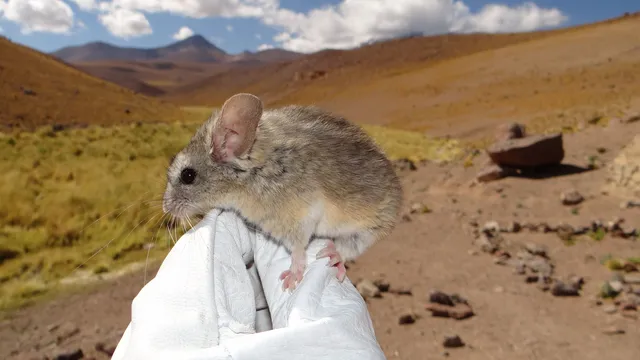
In a groundbreaking study published in July 2023, researchers investigated the survival mechanisms of Andean leaf-eared mice living at extreme altitudes on the dormant Llullaillaco volcano, which is located on the border between Argentina and Chile. The study was conducted by a team led by Jay Storz, a professor of biological sciences at the University of Nebraska–Lincoln, who expressed astonishment at the existence of life in such harsh environments. The researchers faced significant challenges due to the thin air, extreme cold, and scarcity of water and vegetation in this desert ecosystem.
The study revealed that these mice have evolved several adaptations that allow them to thrive in conditions that are not suitable for long-term human survival. For instance, the high-altitude mice possess genetic changes that enable them to maintain their body heat and oxygen levels more effectively than their counterparts from lower altitudes. Additionally, they have developed the ability to digest and detoxify plants that would typically be harmful, showcasing their remarkable adaptability.
The researchers also noted that the high-altitude mice exhibit increased daytime activity, likely due to reduced predation risks and warmer temperatures during those hours. However, the study was not without its ethical dilemmas, as some mice had to be euthanized for tissue analysis to fully understand their biology. This aspect of the research highlights the lengths to which scientists will go to uncover the secrets of life in extreme environments.
Graham Scott, a co-author of the study and a professor of biology at McMaster University in Canada, emphasized the significance of these findings, stating that they illustrate how life can not only survive but also thrive in extreme conditions. The research raises intriguing questions about the limits of life on Earth and whether other animals can exist at even higher elevations than the Andean leaf-eared mice. The study serves as a testament to the resilience of life and the ongoing quest to understand the biological mechanisms that enable survival in some of the planet's most inhospitable environments.