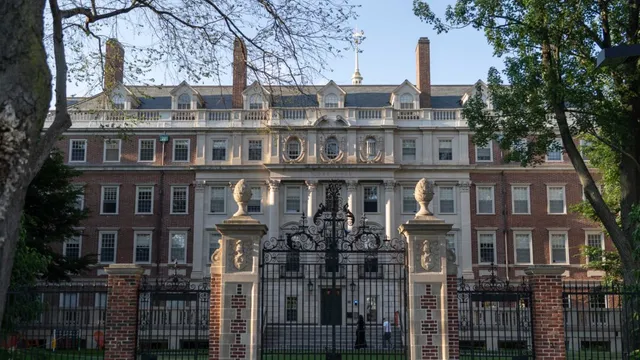
On July 20, 2026, the Justice Department (DOJ) announced an investigation into Harvard University regarding its financial aid programs linked to foreign funding, particularly from China. The inquiry stems from concerns that Harvard may have violated Title VI of the Civil Rights Act, which prohibits discrimination based on national origin. The DOJ's review was prompted by Harvard's disclosures of nearly $4.5 billion in foreign funding, with $630 million sourced from China, raising questions about compliance with federal laws governing educational institutions.
The investigation specifically targets financial aid programs that may favor students from certain countries, potentially excluding American citizens. Harmeet K. Dhillon, assistant attorney general of the DOJ’s Civil Rights Division, emphasized that schools cannot accept federal funds while simultaneously providing financial aid that discriminates against American students. Harvard has stated that it adheres to legal obligations and does not unlawfully discriminate in its financial aid allocations.
The DOJ's compliance review is significant as it reflects ongoing scrutiny of Harvard's funding practices, particularly in light of the Trump administration's efforts to challenge perceived biases in higher education. The investigation is not a response to an external complaint but rather an initiative by the federal government to ensure adherence to civil rights laws. Harvard's acceptance of substantial donations from Chinese sources has drawn criticism, especially when these funds are tied to scholarships that may limit eligibility based on national origin.
The Chinese Embassy in Washington has defended educational cooperation between the U.S. and China, asserting that such exchanges should not be hindered by political issues. Harvard's financial aid policies, which include need-based scholarships for international students, have been a point of contention, particularly as they relate to the university's obligations under federal law. The outcome of this investigation could have significant implications for Harvard and its funding practices moving forward.