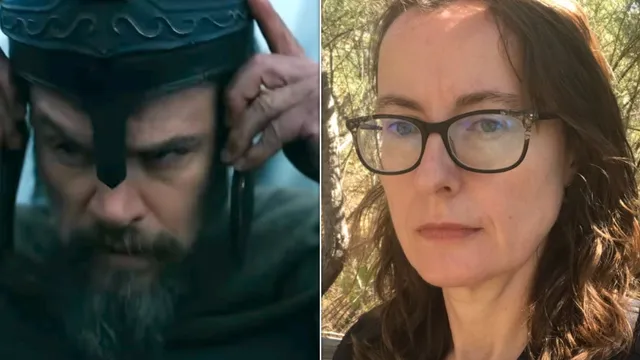
In a recent review published in the London Review of Books, Emily Wilson, a classics professor at the University of Pennsylvania, expressed her critical views on Christopher Nolan's film adaptation of 'The Odyssey'. Wilson, who translated the ancient Greek poem in 2017, noted that the film, while entertaining, lacked narrative and emotional depth, comparing it to a fireworks display. She criticized the writing as 'abysmal', stating that characters lacked convincing motivations. Additionally, she addressed the film's race-neutral casting, suggesting that it did not offer progressive representation and that many non-white actors were under-utilized.
Following the backlash from her review, which went viral, Wilson took to Bluesky to clarify her comments, particularly regarding the casting of actors like Zendaya and Himesh Patel. She acknowledged that while the actors were talented, their roles were limited, and she regretted how she framed her critique. Wilson emphasized that her intention was not to attack the film or its creators but to provide an honest assessment, noting that she enjoyed some of Nolan's earlier works, such as 'Memento'.
Despite her harsh critique, Wilson recognized the film's potential positive impact, stating that it could attract new audiences to cinema and literature. She expressed a desire for the film to succeed in bringing attention to ancient texts and the humanities. In her follow-up, she questioned whether her review was too harsh or not harsh enough, indicating her struggle with balancing honesty and constructive criticism.
Overall, Wilson's review and subsequent comments highlight the complexities of adapting classic literature into modern film, particularly regarding representation and narrative depth. Her reflections on the film's casting choices and writing quality reveal ongoing discussions in the film industry about inclusivity and the responsibilities of filmmakers in portraying diverse characters.