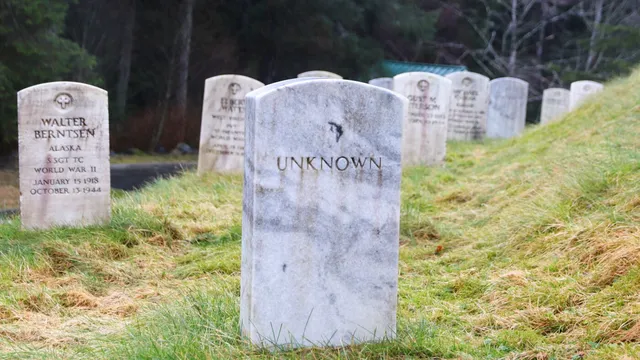
The history of unidentified soldiers from World War II is a poignant and complex narrative that reflects the profound impact of the war on individuals and nations. Following the end of the conflict in 1945, millions of soldiers were unaccounted for, with many bodies left on battlefields across Europe and the Pacific. The sheer scale of the war, which resulted in an estimated 70-85 million fatalities, meant that identifying every fallen soldier was an insurmountable task. As a result, many soldiers were buried in mass graves or left in unmarked locations, leading to a significant number of unidentified remains. This situation prompted various nations to establish processes for the identification of these soldiers, as well as memorials to honor their sacrifice.
In the United States, the Department of Defense initiated the American Graves Registration Service (AGRS) to locate, identify, and repatriate the remains of American soldiers. The AGRS faced numerous challenges, including the condition of the remains and the lack of reliable records. Despite these obstacles, the efforts led to the identification of thousands of soldiers, while many others remained unknown. The establishment of the National Memorial Cemetery of the Pacific, also known as Punchbowl Cemetery, in Hawaii, became a significant site for honoring unidentified soldiers, with a memorial dedicated to those who could not be identified. Similar efforts were made by other countries, including the United Kingdom and Germany, each creating their own memorials and identification processes.
The concept of the "unknown soldier" emerged as a powerful symbol of national grief and remembrance. Many countries, including the United States, France, and the United Kingdom, established tombs for unknown soldiers, which became sites of national significance. These tombs serve not only as a tribute to the unidentified soldiers but also as a reminder of the collective loss experienced during the war. The Unknown Soldier's tomb in Arlington National Cemetery, dedicated in 1921, is one of the most recognized, representing all American soldiers who died without identification. Such memorials have become focal points for commemorative events, particularly on Memorial Day and Veterans Day, where citizens gather to honor the sacrifices made by those who served.
The legacy of unidentified soldiers from World War II continues to resonate today, as efforts to identify remains persist. Advances in forensic science, including DNA analysis, have provided new opportunities for identification, allowing families to find closure and honor their loved ones. Organizations and initiatives dedicated to identifying missing soldiers have emerged, reflecting a commitment to ensuring that no soldier is forgotten. The history of these unidentified soldiers serves as a reminder of the human cost of war and the importance of remembrance, as nations strive to honor the sacrifices made by those who fought for freedom.