NATO allies prepare to match US defense spending amid ongoing tensions
politics
controversial
impactful

NATO allies prepare to match US defense spending amid ongoing tensions

81
(Update: )
Prime Minister of the Netherlands since 2010
capital of Turkey
country in North America
country primarily in North America
intergovernmental military alliance between 31 member states
  • NATO leaders met in Ankara on July 7-8, 2026, to discuss defense spending and support for Ukraine.
  • Mark Rutte announced that European allies and Canada are on track to match U.S. defense spending.
  • The summit aimed to project unity among NATO members despite ongoing tensions over military commitments.
Share opinion
8

Story

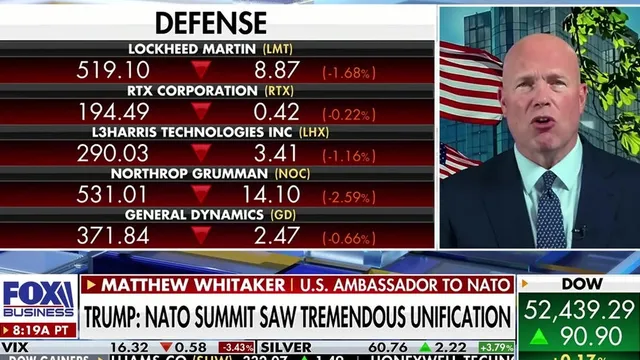
On July 7-8, 2026, NATO leaders convened in Ankara, Turkey, for their annual summit, where defense spending and support for Ukraine were key topics. Mark Rutte, the Secretary-General of NATO, emphasized that European members and Canada are making progress towards aligning their defense expenditures with those of the United States, which has historically criticized Europe for insufficient military spending. The summit followed a devastating Russian attack on Ukraine, prompting calls for increased military support for Kyiv, including air defense systems. Rutte noted that NATO allies are investing around 4 percent of their GDP in defense, generating significant additional funding for military capabilities. The summit also highlighted the ongoing tensions between NATO members and the United States, particularly regarding military commitments and spending. U.S. President Donald Trump has been vocal about his dissatisfaction with European allies not contributing enough to the alliance, which has led to discussions about the need for a more equitable distribution of defense responsibilities. Despite these tensions, NATO leaders aimed to project unity and commitment to collective security, with plans to endorse a communique pledging substantial financial support for Ukraine. In addition to addressing defense spending, the summit focused on the need for NATO to enhance its military capabilities in response to the evolving security landscape, particularly the threats posed by Russia and Iran. Rutte mentioned that NATO allies would invest over $40 billion in anti-drone capabilities over the next five years, reflecting a commitment to modernizing defense strategies. The discussions also included the importance of producing more military equipment domestically to ensure that NATO can respond effectively to emerging threats. As the summit concluded, the leaders reaffirmed their commitment to supporting Ukraine and enhancing NATO's collective defense posture. The ongoing conflict in Ukraine has shifted perceptions among NATO members, with many now viewing Ukraine as a crucial partner in European security rather than merely a beneficiary of support. This evolving dynamic underscores the importance of NATO's unity and the need for all members to contribute to shared defense goals.

Context

NATO defense spending has been a critical topic of discussion among member countries, particularly as global security challenges continue to evolve. The alliance has set specific defense spending targets for 2026, aiming to ensure that all member states contribute adequately to collective defense. The commitment to spend at least 2% of their Gross Domestic Product (GDP) on defense by 2026 reflects the need for a robust military capability in response to various threats, including geopolitical tensions and emerging security challenges. This target is not merely a guideline but a strategic necessity to maintain NATO's deterrence and defense posture in an increasingly complex security environment. The rationale behind the 2% target is rooted in the recognition that adequate defense spending is essential for maintaining military readiness and capability. Many NATO members have historically struggled to meet this benchmark, leading to disparities in defense capabilities across the alliance. The 2026 target serves as a catalyst for nations to prioritize defense budgets, invest in modernization, and enhance interoperability among forces. This is particularly important as NATO seeks to address challenges posed by state and non-state actors, cyber threats, and hybrid warfare tactics that require a coordinated and well-resourced response. In recent years, several NATO countries have made significant strides toward meeting the 2% target, with increased investments in defense infrastructure, personnel, and advanced technologies. The commitment to defense spending is not only about numbers; it also reflects a political will to support collective security and deter aggression. The alliance has emphasized the importance of burden-sharing, ensuring that all member states contribute fairly to the collective defense effort. This approach fosters solidarity among allies and reinforces the principle that an attack on one is an attack on all. As we approach the 2026 deadline, it is crucial for NATO members to remain vigilant and proactive in their defense spending commitments. The geopolitical landscape is constantly changing, and the alliance must adapt to new threats and challenges. By adhering to the 2% GDP target, NATO can ensure that it remains a credible and effective military alliance, capable of responding to any threat to its members. The commitment to defense spending is not just a financial obligation; it is a testament to the unity and resolve of NATO in safeguarding peace and security in the Euro-Atlantic area.