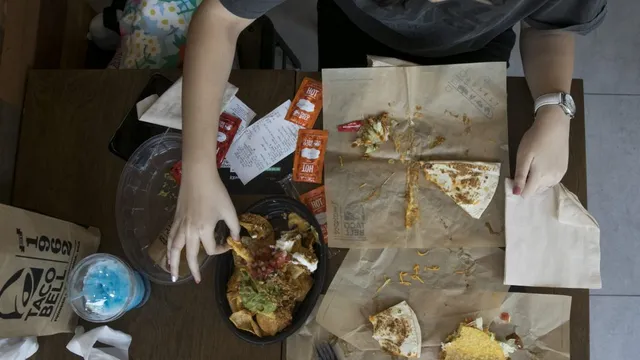
Taco Bell removes contaminated lettuce after widespread cyclospora outbreak
lifestyle
informative
tragic

Taco Bell removes contaminated lettuce after widespread cyclospora outbreak

31
(Update: )
country primarily in North America
  • Federal health officials linked iceberg lettuce from Mexico to a cyclospora outbreak at Taco Bell locations in five states.
  • Taco Bell announced the removal of the contaminated lettuce from its supply chain as a precautionary measure.
  • The incident highlights ongoing food safety challenges faced by major restaurant chains.
Share opinion
3

Story

In recent months, a significant foodborne illness outbreak linked to Taco Bell locations across five states in the United States raised serious health concerns. Federal health officials identified iceberg lettuce sourced from Mexico as the culprit behind the infections caused by the parasite cyclospora. The U.S. Food and Drug Administration conducted an investigation that pinpointed a single supplier responsible for the contaminated lettuce. In response to the outbreak, Taco Bell announced the indefinite removal of the affected ingredient from its supply chain nationwide, promising to replace it within 24 hours in select states. This precautionary measure aimed to protect customers and prevent further illnesses. The outbreak is part of a troubling trend of foodborne illnesses associated with major restaurant chains, which, despite their size and resources, can still face significant challenges in ensuring food safety. Previous outbreaks have led to serious health consequences and have prompted changes in food safety regulations. For instance, a 2024 E. coli outbreak linked to raw onions on McDonald's Quarter Pounder hamburgers sickened over 100 individuals, leading to temporary menu changes and heightened scrutiny of food suppliers. In 2015, Chipotle faced a severe E. coli outbreak that resulted in more than 50 illnesses, revealing lapses in food safety practices that prompted the company to shut down multiple locations. Similarly, Taco Bell had to remove green onions from its restaurants in 2006 after an E. coli outbreak sickened dozens of customers. These incidents highlight the ongoing risks associated with foodborne pathogens and the importance of stringent food safety measures in the restaurant industry. The historical context of foodborne illness outbreaks in the U.S. underscores the need for continuous improvement in food safety protocols. The deadly Jack in the Box outbreak in the early 1990s, which resulted in four deaths and over 700 illnesses, led to significant regulatory changes, including the implementation of the Hazard Analysis and Critical Control Point system by the U.S. Department of Agriculture. This system aims to identify and control hazards in food production, ultimately enhancing consumer safety. As the recent Taco Bell outbreak illustrates, the restaurant industry must remain vigilant in its efforts to prevent contamination and protect public health.

Context

Foodborne illnesses are a significant public health concern in the United States, affecting millions of individuals each year. The Centers for Disease Control and Prevention (CDC) estimates that approximately 48 million people become ill from foodborne pathogens annually, resulting in 128,000 hospitalizations and 3,000 deaths. The U.S. government has established a comprehensive framework of regulations and guidelines to mitigate the risks associated with foodborne illnesses. These regulations are enforced by various federal, state, and local agencies, with the Food and Drug Administration (FDA) and the United States Department of Agriculture (USDA) playing pivotal roles in ensuring food safety across the nation. The FDA oversees the safety of most food products, while the USDA is responsible for the safety of meat, poultry, and egg products. The foundation of food safety regulations in the U.S. is the Food Safety Modernization Act (FSMA), enacted in 2011. This landmark legislation shifted the focus from responding to foodborne illness outbreaks to preventing them. FSMA mandates that food producers implement preventive controls, conduct risk assessments, and maintain detailed records to ensure compliance with safety standards. Additionally, the act emphasizes the importance of traceability in the food supply chain, enabling quicker responses to potential outbreaks. The FDA has also developed the Food Code, a model for state and local governments to adopt, which provides guidelines for food safety practices in retail and food service establishments. State and local health departments play a crucial role in enforcing food safety regulations. They conduct routine inspections of food establishments, investigate foodborne illness outbreaks, and provide education and training to food handlers. These agencies work in collaboration with the CDC and the FDA to monitor foodborne illnesses and implement necessary interventions. Furthermore, public awareness campaigns are essential in educating consumers about safe food handling practices, such as proper cooking temperatures, cross-contamination prevention, and the importance of handwashing. Despite the robust regulatory framework, challenges remain in the fight against foodborne illnesses. Emerging pathogens, changes in food production and distribution practices, and globalization of the food supply complicate the landscape of food safety. Continuous research and adaptation of regulations are necessary to address these challenges effectively. The collaboration between federal, state, and local agencies, along with the active participation of the food industry and consumers, is vital to enhancing food safety and reducing the incidence of foodborne illnesses in the United States.